
Pittsburgh lock machines and TDF flange machines form different joints in rectangular duct fabrication. The right pick depends on duct size, seam type, production volume, and installation method.
The Pittsburgh lock seam closes the longitudinal joint along a duct section. The TDF flange connection joins duct sections end to end. One machine works along the length of the metal; the other prepares the transverse edges.
A workshop matches equipment to its actual duct mix. Technical capabilities, best-fit applications, compliance, and cost all shape that decision. This comparison sets those factors side by side, so readers can judge which machine suits their shop floor and where a TDF Flange Machine earns its place.
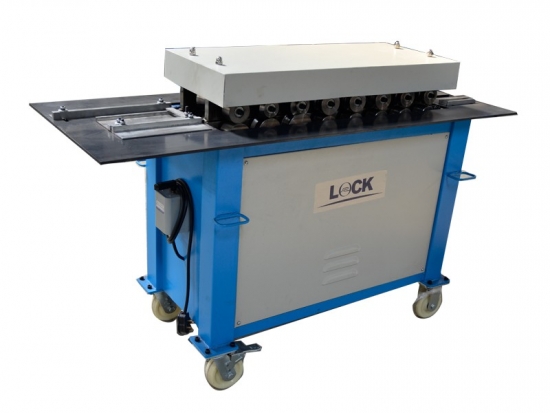
A Pittsburgh lock machine is a roll-forming machine used in HVAC sheet-metal fabrication. Shops also call it a lockformer or a Pitts machine. Its job is to create the seams and edges that let rectangular ductwork lock together quickly and securely. The machine forms precise profiles, both female and male, so duct sections join without welding or excessive fastening.
The Pittsburgh seam itself is a strong interlocking joint. A female pocket receives a male right-angle flange. When the two press together, they create a tight, durable, and leak-resistant connection. Duct shops often distinguish between small and large Pittsburgh seams for their own tooling and handling purposes. SMACNA and most job specifications, however, list only one Pittsburgh lock seam, so the shop-level distinction stays internal.
Pittsburgh seams are used on heavier gauge, larger, and higher static pressure ductwork, as the end of the female seam folds over the male portion, locking it in place. Snap-lock is typically used in smaller, lighter gauge applications.
Multi-function capability sets these machines apart. A six-function lock forming machine handles Pittsburgh female and male profiles, standing seam, C-lock, curving angle, and Z-lock operations. Some builders also configure a lock former snap lock machine with elbow hem, single hem, double hem, and locking pin functions. These profiles cover a wide range of duct shapes.
The machine processes sheet thicknesses of 0.5–1.5 mm. Its gears, shafts, and rollers use high-quality steel under strict heat treatment, which supports durability and stable quality. Operators appreciate the easy installation, flexible movement, and convenient operation. The equipment suits square and rectangular thin-plate ducts for ventilation, air conditioning, and purification work.
Construction quality varies by manufacturer. ISO-certified builds give buyers a baseline for reliability. Beyond certification, differences typically lie in machine construction, accessories, power requirements, and production capabilities. A buyer should compare those four areas against the shop's duct mix before choosing a model.
Pittsburgh lock machines suit several jobs on a typical shop floor. They handle lock processing of metal plate connections and closed connections of round air ducts. They also form the longitudinal seams on rectangular ductwork, where the seam runs the full length of each section.
A small shop often runs one multi-function lockformer for most of its rectangular work. A larger shop may pair a Pittsburgh machine with a TDF Flange Forming Machine, so longitudinal seams and transverse flanges come off separate stations. That layout keeps each machine focused on one joint type and reduces changeover time.
Selection depends on the Pittsburgh lock size a shop needs and its other production requirements. Duct gauge, section length, and the mix of round and rectangular work all shape the choice.
Machine speed and consistency drive the output gains. Roll-forming runs at 36 feet per minute, and the process cuts production time by up to 90% compared with manual hammering methods. A single operator can complete most operations without special skills, and adjustable speed control lets the shop match pace to the job.
Three handling points protect seam quality:
The machine automatically adjusts to sheet thickness, with a manual override available, and it handles 18–24 ga material. Consistent seam quality comes from the machine itself, so output stays uniform across a production run.
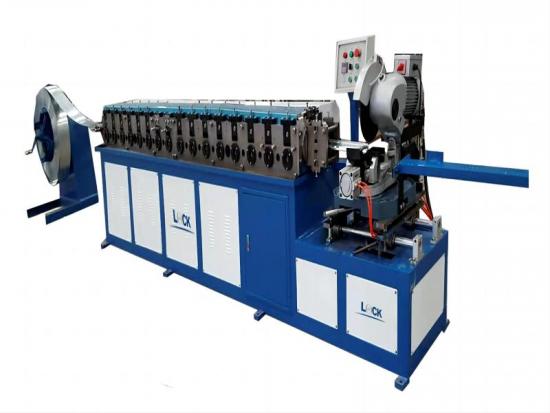
A TDF Flange Machine is special equipment for flange forming in air ducts. It bends the transverse edges of a duct section into a profile that connects one section to the next. The TDF flange system is one of the two major flange connection systems used in HVAC ductwork, and it dominates modern rectangular duct production.
The machine takes flat metal sheets and transforms them into flanged edges through precise bending and forming. The result is a tapered shape that allows a snug fit when connecting duct sections. That taper ensures secure assembly and optimizes airflow within HVAC systems, which contributes to energy efficiency and effective climate control.
One risk point deserves attention. The cut surface of the formed flange requires anti-corrosion treatment. Shops should apply a protective coating to that edge, because bare cut metal corrodes faster than the coated faces of the sheet.
A TDF Flange Forming Machine combines flange profile and cleat production in one unit. Typical specifications show the scale of the work:
|
Feature |
Specification / Benefit |
|---|---|
|
Roll forming speed |
45 ft/min |
|
Forming stations |
15 flange + 14 cleat |
|
Flange capacity |
18–24 gauge steel |
|
Cleat capacity |
22 gauge steel |
|
Main motor |
5 HP, 220–240V, 60Hz, 3 Phase |
|
Machine weight |
2,100 lbs |
Durable design separates good machines from average ones. Ball bearings replace traditional needle roller bearings, so the equipment runs smoothly and lasts longer. Dual-sided manual feeding with simultaneous forming lets one side form the flange while the other side handles hook installation, which greatly improves efficiency. Buyers can choose a single type for on-site or limited-space work or a duplex type that forms flanges on both sides at once for large-scale production. A 3-year manufacturer's warranty is common on quality builds.
Transverse duct connections are the core job. A shop forms the flange on each duct end, then bolts adjacent sections together through the matched profiles. This bolted flange assembly suits rectangular duct runs where sections join end to end, and it keeps long runs rigid and aligned.
A TDF Flange Folding Machine fits shops that produce rectangular duct in volume. The dual-sided manual feeding design forms the flange on one side while the other side handles hook installation. That layout greatly improves efficiency on long production runs. Small shops can choose a single type for on-site or limited-space work. Large plants often select the duplex type, which forms flanges on both sides at once.
TDFC and TDCF machines differ from lock-formers in function, advantage, and application. A lock-former shapes the longitudinal seam along the duct length. A TDF Flange Machine shapes the transverse edge that joins one section to the next. The two machines therefore serve different stations on the same production line.
Speed and capacity shape the workflow. Roll forming runs at 45 ft/min, and the unit forms flanges on 18–24 gauge steel. The 15 flange stations and 14 cleat stations produce both profiles in one pass, so a shop avoids a separate cleat operation. One handling point matters: the cut surface of each flange needs anti-corrosion treatment. Operators should coat that bare edge before assembly, because unprotected cut metal corrodes faster than the coated faces of the sheet.
The two machines solve different problems, so a direct comparison shows where each one fits best. The table below sets the main criteria side by side.
|
Criterion |
Pittsburgh Lock Seam |
TDF Flange Connection |
|---|---|---|
|
Structural strength |
High; resists compression well; suits medium to high pressure systems |
High when combined with cleats and corner pieces; also suits medium to high pressure |
|
Air-tightness |
Good, but often needs added sealant |
Best sealing performance; preferred for low-leakage systems |
|
Installation efficiency |
Slowest; requires manual hammering or pneumatic closing of the locking tab |
Fast; standardized components, no external angle-steel flange, reduced labor |
|
Material thickness range |
0.5–1.2 mm, including thin gauges |
0.6–1.2 mm |
|
Equipment and cost |
Pittsburgh lockformer; low cost; compatible with most standard sheet-metal lines |
TDF flange forming machine; medium cost; good fit with automated lines |
|
Maintenance and rework |
Seams can be pried open for rework |
Durable joints, but corrections are harder and demand high forming precision |
|
Application fit |
Commercial and industrial HVAC ducts; economical and versatile |
Low-leakage HVAC projects; shops needing speed and sealing |
A Pittsburgh lockformer handles 22–26 gauge at about 36 ft/min and suits small-to-medium workshops. A TDFC/TDCF roll-former runs 18–24 gauge flange at roughly 45 ft/min and suits high-volume production with low leakage and precise flange alignment. A lock former snap lock machine covers lighter work in the same shop.
SMACNA recognizes the Pittsburgh lock as the gold standard for longitudinal seams. It provides a mechanical bond that resists pulling apart and holds duct shape over the service life. SMACNA TDF and TDC cover transverse joints in high-pressure systems, and Seal Class A applies to all joints, seams, and penetrations above 4" WG. Seal Class B covers transverse joints and longitudinal seams, while Seal Class C focuses on transverse joints only. A shop should match its seal class to the project specification before committing to either joint type.
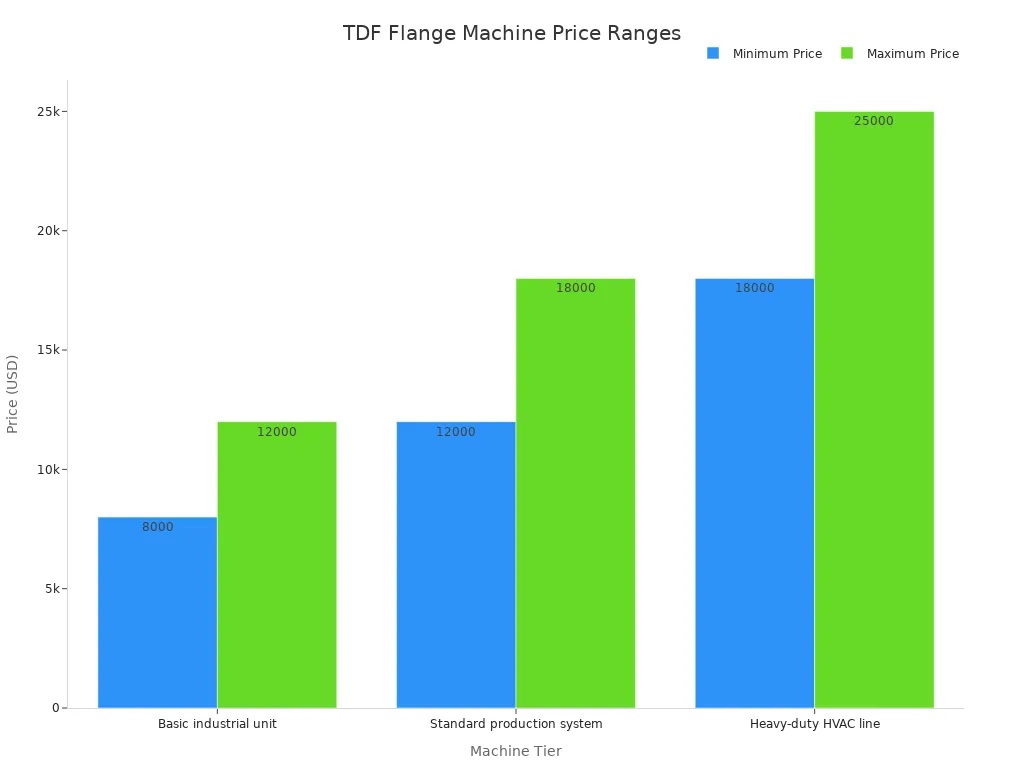
Cost shapes the decision just as much. A Pittsburgh lockformer carries a lower equipment cost and works with most standard sheet-metal lines. A TDF Flange Machine costs more up front, with roll forming units priced from $15,000 to $80,000+. A complete TDF/TDC line ranges from about $20,000 for a small workshop to $150,000+ for a medium commercial line, with payback usually within 8–24 months.
The operating side favors TDF in volume work. The system replaces 2–4 workers, cuts scrap from 8–12% down to 2–4%, and can pay back in 2–6 months with monthly savings of $6,000–$12,000. A TDF Flange Folding Machine therefore earns its cost fastest on long, repetitive runs. Pittsburgh remains the economical, versatile choice for mixed work and thinner gauges. Neither option wins everywhere; project size, pressure rating, installation environment, and budget decide the fit.
Workshop size and duct mix point to different equipment paths. A small shop or startup often runs daily output under 600 m² in a workshop under 150 m². An Auto Duct Line 3 covers that workload and costs less than larger lines. The machine handles everyday rectangular production without excess capacity.
|
Production Scenario |
Recommended Machine |
Rationale |
|---|---|---|
|
Small shops / startups |
Auto Duct Line 3 |
Sufficient and more affordable for daily output under 600 m²; fits workshops under 150 m² |
|
High-volume shops |
Auto Duct Line 5 |
Necessary for daily output over 1,200 m²; saves labor at 600–1,200 m²; recommended if planning to grow in 2–3 years |
|
Mixed duct production (high mix, small batches) |
Plasma table plus semi-automatic formers |
Auto duct lines are repeat-production machines; for shops with ~80% bespoke fittings, a plasma table with semi-automatic formers out-produces an auto duct line |
High-volume shops need a different answer. An Auto Duct Line 5 becomes necessary once daily output passes 1,200 m². It also saves labor in the 600–1,200 m² band and makes sense for a shop that plans to grow within 2–3 years. Mixed production rewards a third approach. Auto duct lines repeat production well, yet a shop with roughly 80% bespoke fittings gets more output from a plasma table paired with semi-automatic formers.
Many shops benefit from both joint technologies. A Pittsburgh lockformer forms the longitudinal seam, and a TDF Flange Machine forms the transverse connection. Running both keeps each station focused and shortens changeover time. A lock former snap lock machine can cover lighter gauge work alongside the heavier Pittsburgh profiles.
Lockforming Machinery supports both paths. The company supplies roll-forming equipment for Pittsburgh seams, TDF flanges, and related profiles, so a shop can build a line around its actual duct mix. A TDF Flange Forming Machine and a Pittsburgh lockformer can share one floor plan, and a TDF Flange Folding Machine fits shops that need folding capacity as well. Buyers should match machine choice to real workflow rather than a single "best" unit.
Pittsburgh lock machines form the longitudinal seam that holds each duct section together. TDF flange machines form the transverse connection that joins duct runs end to end. Many shops benefit from both.
Readers should weigh duct size and gauge, seam versus flange requirements, production volume, installation method, code requirements, and budget. A Pittsburgh lock rollformer typically costs $10,000–$30,000, while a TDC/TDF rollformer runs $25,000–$60,000.
Match the machine to the actual duct mix and workflow, not to a single "best" unit. Lockforming Machinery can guide shops through configuring a line around their real production needs.
A Pittsburgh lock machine forms that seam. It rolls the female and male profiles along the duct length, and the two edges interlock into a tight joint. Shops call the unit a lockformer or a Pitts machine.
That machine produces the transverse flange. It bends each duct end into a tapered profile, and bolts then join adjacent sections. The TDF system ranks as one of the two major flange connection systems in HVAC ductwork.
Yes. Many shops pair a Pittsburgh lockformer with a TDF Flange Folding Machine. Each station then focuses on one joint type, and changeover time drops. The layout suits shops with a broad rectangular duct mix.
A Pittsburgh lockformer processes 0.5–1.5 mm sheet and covers 22–26 gauge work. A TDF machine forms flanges on 18–24 gauge steel. A lock former snap lock machine covers lighter gauge work in the same shop.
A Pittsburgh lock rollformer typically runs $10,000–$30,000. A TDC/TDF rollformer runs $25,000–$60,000. The TDF unit earns back its higher price on long, repetitive runs through labor savings and lower scrap.
online service



 IPv6 network supported