
A small round-duct and elbow workshop can start at roughly $3,000–$15,000. A medium-sized operation typically needs $15,000–$50,000 or more. That gap is wide, and the total depends on scale and equipment choice.
An entry-level shop spends little on machinery and keeps output simple. A larger operation invests in more lines, more capacity, and more floor space. This post breaks down equipment prices, minimum versus full setup tiers, and realistic payback periods for HVAC Duct Manufacturing.
Commercial ductwork drives most revenue in this trade. Commercial buildings account for roughly 42% of duct market value, ahead of residential work at about 27%. That split matters for budgeting. A shop that targets commercial contractors needs heavier equipment, tighter tolerances, and compliance with ASHRAE leakage and efficiency standards. A residential-focused shop can run simpler lines and smaller machines.
Target market selection also varies by region. Mature markets favor advanced features and service depth, while growth markets prioritize accessibility and value. Regulatory readiness and local channel depth shape entry strategy in each area. A new HVAC Duct Manufacturing operation should define its customer base before ordering any machinery, because that choice sets the equipment budget.
Duct fabrication follows a clear sequence. The shop first prepares drawings and measurements, then cuts sheet metal to size. Forming and bending come next, by assembly and quality inspection. Each stage uses different machines, and the equipment list grows with the product range.
Round duct work relies on roll forming and spiral machines, while rectangular sections call for press brakes and a TDC Flange Forming Machine to create consistent connection profiles. An iron sheet bending machine handles smaller bends and fittings, and a Quintuple Groove Beading Machine stiffens flat panels and improves rigidity. Lockforming creates the interlocking seams that hold sections together, and seaming closes the joints. After assembly, the shop checks seam integrity, dimensional accuracy, and flange alignment before ducts leave the floor.
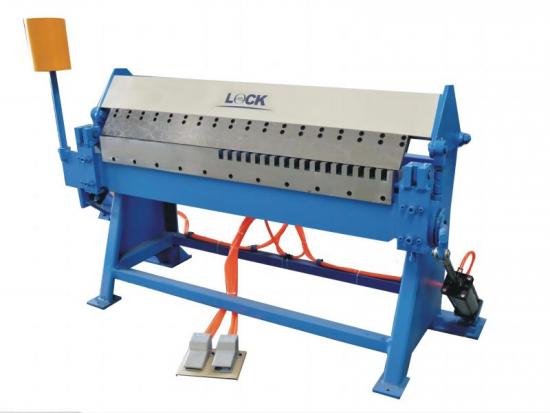
The machine list sets the largest line in the budget. A lockforming machine creates the interlocking seams, a shear cuts coil and sheet to size, a roll former shapes round sections, a brake bends rectangular fittings, and a seamer closes joints. Buyers should treat the figures below as estimates, since capacity, brand, and automation level move prices considerably.
|
Machine |
Estimated Price Range |
|---|---|
|
Lockforming machine |
Entry-level units sit at the low end of the budget; automated lines cost more |
|
Shear (foot or powered) |
Low thousands for manual models; powered shears cost more |
|
Roll former |
Varies widely with diameter range and drive type |
|
Press brake |
Pneumatic duct brakes generally run $6,000–$25,000 |
|
Seamer |
Modest cost for basic models; heavier capacity adds cost |
A specific example shows where a single machine lands. The TDFC Air Brake, a pneumatic model that bends 0–120° angles in rectangular ductwork, lists at $5,900 before tax. A shop that adds a TDC Flange Forming Machine gains consistent flange profiles and faster assembly on rectangular runs. Lockforming Machinery supplies duct fabrication equipment across setup tiers, from entry-level machines for a small workshop to automated lines for a medium operation. Each machine type fits a different production model, so the right choice depends on order volume rather than brand preference.
Financing can spread the outlay. An Equipment Finance Agreement often covers 100% of equipment cost and may bundle shipping, installation, software, and training, which can add 10–20% to the purchase price. Terms typically run 24 to 84 months. Standard manufacturing lead time is 8–12 weeks, while in-stock quick-ship machines load onto a truck within 24–48 hours after payment clears.
Machinery alone does not open the doors. Rent dominates the ongoing budget, and the figure tracks local industrial rates and square footage. Power demand rises with every welder and motor on the floor, so a shop should confirm service capacity before signing a lease. Hand tools, safety gear, and measuring instruments add a modest but real cost.
Software deserves its own line. Duct estimating and nesting programs carry licensing fees, and many equipment finance packages can bundle that cost with the machine. Licensing, bonding, and insurance typically run $4,000–$9,000. A new HVAC Duct Manufacturing operation should budget this amount early, because contractors often require proof of insurance before releasing purchase orders.
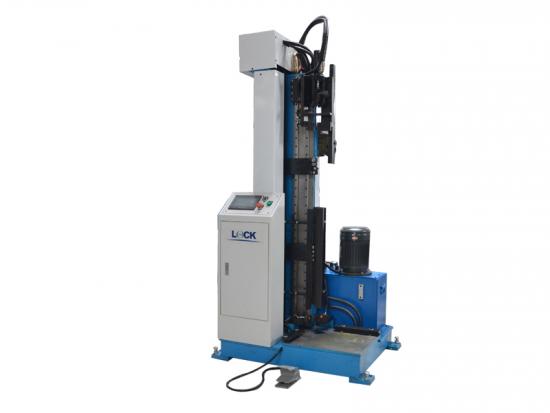
A small workshop for round duct and elbows can open on roughly $3,000–$15,000. This tier suits an owner-operator who serves local contractors and keeps the product range narrow. The budget covers a shearing machine, a manual folding machine, and a lock machine for manual cutting, folding, and locking. An iron sheet bending machine fits this tier well, because it handles smaller bends and fittings without a large footprint. A used or entry-level lockformer keeps the largest single cost modest.
The minimum setup works as a real business model, not a stepping stone. Low overhead means lower break-even volume, and a small shop can compete on quick turnaround for simple round runs. The trade-off is capacity. Manual stages slow production, and the product mix stays limited to straightforward duct and elbow work.
A medium operation typically needs $15,000–$50,000 or more. This tier targets commercial contractors and higher order volume, so the equipment list grows in both count and automation. The table below shows how configurations scale across four stages.
|
Stage |
Mode |
Equipment Configuration |
|---|---|---|
|
1.0 Manual single-machine operation |
Manual cutting, folding, and locking |
Shearing machine, manual folding machine, lock machine |
|
2.0 Semi-automation |
Single-machine automation |
Hydraulic shearing machine, CNC bending machine, automatic lock machine |
|
3.0 Assembly line |
Online production |
U-shaped fully automatic duct production line (uncoiling → forming → cutting) |
|
4.0 Smart factory |
Internet + data |
Production line + MES system + remote monitoring + automatic scheduling |
A shop can enter at stage 1.0 and climb as orders grow. Semi-automation replaces manual steps with hydraulic and CNC machines, which raises throughput and consistency. An assembly line adds a U-shaped fully automatic duct production line that runs uncoiling, forming, and cutting in sequence. The smart factory stage layers MES software, remote monitoring, and automatic scheduling on top of the line.
Both tiers are valid choices for different business models. A minimum setup fits a lean, local operation. A full-scale setup fits a shop chasing commercial contracts and volume. Lockforming Machinery equipment scales from entry-level machines to full automated lines, so the same supplier can serve either tier. That continuity matters for an HVAC Duct Manufacturing business that plans to grow, because a shop can add capacity without switching vendors or relearning a new equipment family.
Payback timing separates a lean workshop from a larger operation. The average payback period for an HVAC round air duct and elbow business runs 6 to 24 months. A small workshop often recovers its investment at the faster end of that range, because the starting outlay stays low and overhead stays thin. A medium operation carries more machinery and more floor space, so payback stretches toward the upper end.
Product mix moves margins more than volume does. Straight ducts earn low to medium margins, while elbows and fittings earn high margins. A shop that sells only straight runs competes on price. A shop that adds fittings and custom elbows captures better rates on the same sheet metal. Commercial ductwork pricing of $3–$15 per square foot, or $50–$350 per linear foot, frames the revenue side. Typical monthly revenue reaches $3,000–$15,000 for a small workshop and $15,000–$50,000 or more for a medium operation.
Automation upgrades follow a similar pattern. One documented case shows a 450,000 RMB equipment investment returning 460,000 RMB in annual savings, a payback of roughly 12 months. A one-person-multi-device operating mode extends that figure to 12–18 months.
Four levers decide whether an HVAC Duct Manufacturing investment pays back on schedule. Target-market selection comes first, since commercial contracts support higher pricing than residential work. Production volume comes second, because fixed costs spread across more square footage of output. Equipment utilization comes third. A machine that sits idle still consumes floor space and capital. A Quintuple Groove Beading Machine illustrates the point well, since beading stiffens flat panels, cuts rework on rejected sections, and keeps downstream stages busy. Local demand closes the list, and a shop should confirm contractor activity in its region before ordering equipment.
Each lever compounds the others. Strong local demand fills the order book, high utilization converts that demand into billable output, and the right market mix lifts the margin on every square foot. A new operation should test all four before scaling up.
Two figures frame the decision. A minimum workshop for round duct and elbows needs roughly $3,000–$15,000. A medium operation serving commercial contractors needs $15,000–$50,000 or more. Readers should match setup scale to their target market and expected order volume before investing. A lean local shop fits the lower tier. A shop chasing commercial contracts fits the upper tier.
The practical next step is a quote comparison. Buyers can request equipment quotes from several suppliers and compare capacity, automation level, and lead time side by side. Lockforming Machinery serves as a resource for evaluating duct fabrication lines across both tiers of an HVAC Duct Manufacturing business.
A small round-duct and elbow workshop opens on roughly $3,000–$15,000. That budget covers a shearing machine, a manual folding machine, and a lock machine. An iron sheet bending machine fits this tier well for smaller bends and fittings. Owners who target commercial contracts should plan for the $15,000–$50,000+ tier instead.
A rectangular line needs a shear, a press brake, a lockformer, and a seamer. A TDC Flange Forming Machine adds consistent flange profiles and speeds assembly on rectangular runs. The TDFC Air Brake, a pneumatic model, lists at $5,900 before tax and bends 0–120° angles.
Standard manufacturing lead time runs 8–12 weeks. In-stock quick-ship machines load onto a truck within 24–48 hours after payment clears. Buyers should confirm lead time before quoting delivery dates to contractors.
Rent dominates the ongoing budget, and power demand rises with every motor on the floor. Licensing, bonding, and insurance typically run $4,000–$9,000. Software licensing adds a separate line. A Quintuple Groove Beading Machine earns its place here, since beading stiffens panels and cuts rework on rejected sections.
The average payback period runs 6 to 24 months. A lean workshop often recovers costs at the faster end, because the starting outlay and overhead stay low. Commercial ductwork pricing of $3–$15 per square foot frames the revenue side. Fittings and elbows earn higher margins than straight runs.
online service



 IPv6 network supported