
You weigh three factors before you commit to any HVAC Duct Fabrication Machine: production volume, material thickness, and budget. Every group above comes in semi-automatic and fully automatic configurations, and the right balance shifts with shop size. Cutting and fitting equipment also falls under material processing. This guide compares machine types, features, and applications, then closes with recommendations by scenario.
|
Functional Group |
What It Does |
|---|---|
|
Material processing |
Uncoils, levels, notches, and shears sheet metal into duct blanks |
|
Seam formation |
Rolls Pittsburgh locks and other seams for longitudinal joining |
|
Bending/forming |
Folds metal at precise angles for boxes, flanges, and edges |
|
Supporting automation |
Integrates these steps into automatic production lines |
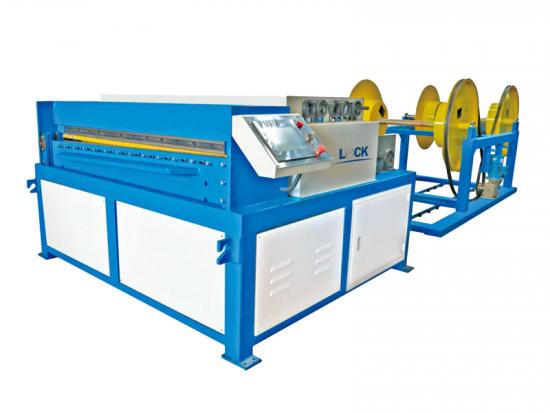
Every HVAC Duct Fabrication Machine on the market belongs to one of four functional groups. Material processing equipment uncoils, levels, notches, and shears sheet metal into duct blanks. Seam formation equipment rolls Pittsburgh locks and other seam profiles onto the longitudinal edges of those blanks. Bending and forming equipment folds metal at precise angles for boxes, flanges, and edges. Supporting equipment covers the reinforcement, fastening, and integration machines that hold a shop together, including beading rollers, riveting machines, and full production lines.
You can treat these groups as a checklist. A shop that covers all four can take raw coil and deliver a finished duct section without sending work outside. A shop that skips one group depends on another supplier for that step.
A typical workflow starts with design and material selection. The metal type—galvanized steel, stainless, or aluminum—directly affects cutting speeds and bending tolerances, so you adjust settings before any metal moves. Cutting comes next. Shearing machines size blanks fast and square, and plasma cutting profiles fittings and custom components with minimal kerf. Downstream operations depend on dead-accurate starting dimensions, so this stage sets the quality ceiling for everything that follows.
Forming and joining follow. A lock forming machine rolls Pittsburgh seam locks onto the longitudinal edges so the four sides snap together without fasteners. A lock seaming machine then closes those seams under uniform pressure for leak-free joints. Folding machines bend panels into rectangular sections, and rolling machines curve blanks into round duct. Beading rollers add reinforcement, and riveting machines fasten panels and fittings with consistent clamping force.
Integrated duct production lines tie these stages into one continuous workflow. Coil feeding, leveling, plasma cutting, notching, beading, and flange forming run in sequence, which cuts handling time and labor dependency. The chart below shows how automation tier changes output across these lines.

Speeds are typical ranges for standard TDF flange duct sizes, and actual output varies with material thickness and profile. Entry-level semi-automatic lines run 15–20 pieces per hour with three to four workers. Fully automatic lines climb from 30–40 pieces per hour at the mid tier to 60–70 at the top tier, with one or two operators overseeing the process. Match the tier to your order volume, because an automatic line that sits idle becomes a financial burden rather than an investment.
Cutting is the first step in any HVAC duct fabrication machine workflow, and it sets the quality ceiling for every operation downstream. Plasma cutters size and notch sheet metal quickly, and they handle the mild steel, stainless steel, and aluminum you meet in everyday ductwork. Match power output to your typical workpiece thickness for clean, slag-free edges.
A durable, adjustable torch holder and automatic torch height control keep cut edges square on uneven plate. Add torch breakaway protection against collisions, and confirm your building power matches the machine's phase, voltage, and frequency. Contaminated air causes internal arcing, so specify a built-in air filter. A Pittsburgh lock only closes cleanly on a square, accurately sized blank, which makes cut quality a seam-quality issue too.
Laser cutting covers the precision end of the same job. Fiber lasers cut straight runs and complex fittings such as elbows and reducers from 0.8–2 mm cold-rolled steel or aluminum, and they hold incision perpendicularity within 0.05 mm/m for tight flange fits. Continuous cutting speeds reach 140 m/min, and mold-free programming cuts production costs by up to 60% on small-batch custom parts.
Two factors dominate selection here: cutting accuracy and bed size. Accuracy determines how well blanks fit together at the seam stage. Bed size determines whether you can nest full duct panels without repositioning, so measure your typical panel dimensions and your floor footprint before you commit.
Weigh application fit, material range, and cutting capacity together. A machine optimized for HVAC work cuts duct panels faster than a general-purpose unit. High-definition plasma gives smooth edges on visible panels, and fine-tip torches with advanced motion controls suit intricate notching. Confirm software compatibility with your existing file formats, and insist on a dust collector for smoke extraction. A nearby service depot with stocked nozzles and electrodes protects your uptime. Lockforming Machinery can help you confirm specifications against your actual panel sizes.
Lock formers roll a specific seam profile onto the edge of a duct blank, so you choose a machine by the seam type your jobs specify and by your production needs. A multi-function unit produces six or seven profiles by swapping roller sets. A six-function machine covers the Pittsburgh female and male, standing seam, C-lock, curving angle, and Z-lock. The Pittsburgh machine roll forms the female pocket seam, and the mating panel carries the male right-angle flange. The Pittsburgh lock is the universally accepted lock in commercial HVAC ductwork. It handles higher pressure classes and larger duct sizes than Snap Lock can accommodate, which makes it the standard choice for demanding commercial work. Every duct shop should have one.
An HVAC groove beading machine complements this group by rolling reinforcement grooves into flat panels, which stiffens wide duct sides against drumming.
Lock formers differ from TDFC/TDCF machines in function and application. A Pittsburgh lock former suits small to medium workshops, runs 22–26 gauge at 36 ft/min, and stays compact and mobile. A TDFC TDCF roll-former produces flanges and cleats compatible with TDC/TDF standards, runs 18–24 gauge flange at 45 ft/min, and fits high-volume production where stronger joints and lower labor costs matter.
Seam closers finish the joint a lock former starts. They press the folded Pittsburgh seam flat under uniform force, which produces a tight, leak-resistant connection on straight ducts, elbows, and complex shapes.
Spiral duct machines take a different route. A specialized spiral roller system wraps pre-rolled metal strip around a mandrel to form round or oval duct continuously. The helix angle, typically 60–75°, sets the pitch and strength of the tube. Seam locking holds air leakage below 2% at 2,000 Pa, meeting SMACNA Class 3. A rotary flying cutter follows the duct and holds length accuracy within ±1 mm per 3 m.
Bending turns flat blanks into duct sections, transitions, and fittings. The work spans several distinct functions, and each one needs its own equipment.
Brakes, presses, rollers, and other forming equipment bend the material into the required duct geometry.
| Function |
Purpose |
Equipment |
|
Beading |
Adds shallow grooves or ribs to boost rigidity and prevent warping under pressure |
Beading machine with adjustable rollers for bead spacing |
|
Flanging |
Creates raised or folded ends for easier assembly and better sealing |
Flanging machine |
|
Flange forming |
Shapes duct edges to accept connecting flanges for strong, leak-free joints |
Flange forming machine with adjustable roller dies |
|
Rolling/curving
|
Curves sheet metal for round or oval ducts with even pressure |
Rolling machines, often paired with flangers |
An HVAC square metal folding machine handles the rectangular side of this work. You bend flat sheet on a metal brake to form tapered transition walls at specified angles, and you keep each bend on its planned line to avoid misalignment. Hand seamers or light hammering coax metal into rounded profiles where the flat pattern includes curves. Dimpling and shrinking help the sheet conform to complex shapes without buckling. Bend flanges perpendicular to the mating surface and hold them at a uniform width for secure seams.
Capacity matching decides whether a machine suits your shop. Tonnage must exceed what your material thickness and strength demand, with a safety margin. Undersized tonnage causes incomplete bends or forces multiple passes. Oversized tonnage on thin material raises cost and overbending risk. Bed length is a hard limit on part width in a single pass, so check it against your widest part early. Back gauge precision controls flange length and bend position, and errors compound across multi-bend parts. Tooling flexibility matters most for varied custom work.
Match the machine class to your fitting types. A panel bender suits large enclosure doors and high-mix thin gauge panels, with zero setup time between different part geometries. A press brake handles thick plate brackets and deep narrow channels that a panel bender manipulator cannot grip. Servo-electric panel benders typically handle up to about 3 mm mild steel, and heavy-duty hydraulic models process up to roughly 4–5 mm mild steel. Confirm the rating on the specific machine before you buy.
An integrated automatic duct line turns separate operations into one continuous workflow. The AML-3 illustrates the concept. It handles 1550mm width material and integrates a twin decoiler, leveller, ribbing, notching, shearing, and folding in a single sequence. The line can also form TDF flange fold profiles, so you produce flanged duct sections without a separate flange station.
You load coils at the decoiler, the leveller flattens the strip, and ribbing stiffens the panel before notching and shearing cut it to size. Folding finishes the blank. Each stage runs in order with minimal handling between them. This arrangement suits a shop that wants predictable output from a compact footprint. Confirm your coil widths and power supply against the line's specifications before you commit.
The choice between configurations comes down to shop profile. The table below maps common situations to suitable setups.
|
Shop Profile |
Suitable Configuration |
Operators Typically Required |
Primary Trade-off |
|---|---|---|---|
|
Low volume, high variety, custom fittings |
Standalone or modular duct machines |
2–4 per machine cell |
Flexibility over throughput |
|
Small workshop, standard duct, limited budget |
Semi-automatic Line 2 or 3 |
2–3 |
Manageable investment, manual downstream |
|
Growing shop, repeatable HVAC orders |
Integrated Line 3 or 4 |
1–2 on the main line |
Balance of cost and output |
|
High-volume, standardized production |
Full automatic Line 5 or U-shape |
1–2 on the main line |
Max throughput, highest capital cost |
Operator counts cover the main forming line only. The full cell may still need 3–4 people for coil loading, seam closing, corner installation, and part handling, even on a fully automatic line.
Semi-automatic machines mix manual setup with powered controls. The operator loads coils and sets duct size, and the machine handles forming speed and seam locking. This suits medium shops needing steady output with flexibility for custom sizes. Fully automatic machines feed metal, form the duct, lock or weld the seam, and cut to size with minimal input. Digital controls set diameter, thickness, and cut length for repeatable accuracy. Expect a higher price and more maintenance, offset by lower per-duct costs at volume. A fully automatic HVAC Air Duct Machine machine rewards steady, standardized demand and punishes idle capacity.
Each functional group earns its place through a distinct job, a distinct set of features, and a distinct application. The table below lines them up side by side so you can see the whole shop on one page.
|
Functional Group |
Function |
Key Features |
Best Applications |
|---|---|---|---|
|
Material processing |
Sizes and notches blanks |
Cutting accuracy, bed size, duty cycle |
Duct panels, fittings, custom components |
|
Seam formation |
Rolls and closes longitudinal seams |
Seam profile range, gauge capacity, forming speed |
Commercial ductwork, round and oval runs |
|
Bending and forming |
Folds angles, flanges, and edges |
Tonnage, bed length, back gauge precision |
Transitions, boxes, fittings |
|
Supporting automation |
Integrates stages into one line |
Coil width, inline stations, control system |
Repeatable, standardized production |
Read the table as a shortlist tool. A gap in any row tells you which capability your shop still outsources.
Production volume separates the groups as much as function does. Standalone cutting and folding equipment suits low-volume, high-variety work. A Pittsburgh lock former covers small to medium shops at 22–26 gauge. Integrated lines reward steady demand, from 15–20 pieces per hour on entry semi-automatic setups up to 60–70 on top-tier automatic lines.
Material thickness narrows the field further. Laser cutting handles 0.8–2 mm cold-rolled steel and aluminum with tight perpendicularity. TDFC roll-formers run 18–24 gauge flange stock for high-volume joints. Servo-electric panel benders top out near 3 mm mild steel, and heavy-duty hydraulic models reach roughly 4–5 mm. A spiral duct machine works from pre-rolled coils rather than flat blanks, so coil specification matters more than gauge rating. Confirm every rating on the specific machine before you buy.
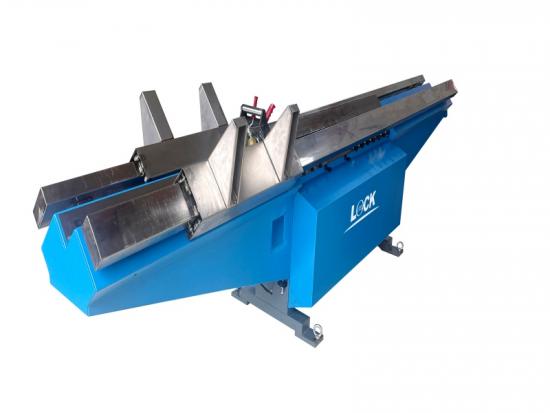
Start with output, not price. A small workshop cutting roughly 20 duct sections daily can run a reliable manual or semi-automatic unit. A factory producing hundreds needs servo control, repeatable positioning, and quick tool changes. Calculate annual output, labor minutes per piece, scrap rate, maintenance, and energy use before you compare quotes. Test every capacity claim on your own galvanized sheet and flange profiles.
Then confirm material thickness at the worksite. Measure the thickest section, including coatings, liners, and insulation. A machine rated for 1.2 mm steel may struggle with folded seams or reinforced corners. Thin sheet rewards adjustable speed, a fine blade, and firm guides. Heavier ductwork demands motor torque, table stability, and cutting depth. Check kerf width and run a test on scrap first.
Set the budget on lifecycle operating cost, not purchase price alone. Include electricity, consumables, calibration, labor, and discarded sheets. Compare energy use per completed duct section rather than rated wattage. Record ten real cuts, calculate the total cost, and review the figures before you commit. A cheaper HVAC Duct Fabrication Machine may need more alignment and produce more scrap, which erases the savings.
Finally, shortlist machine types against three questions. Which cutting method fits your materials and component dimensions? Which forming and folding configuration matches your duct construction method, sheet thickness, duct dimensions, and connection system? Which automation level matches your volume? Smaller operations prioritize essential automated functions, and high-volume manufacturers benefit from a comprehensive production line.
Gather performance feedback from shops running the same machine on similar work before you sign. Then verify the physical and service side of the purchase against the table below.
|
Evaluation Area |
Key Considerations |
|---|---|
|
Machine footprint |
Floor space, ceiling height for large ductwork, ventilation, and material flow paths; confirm siting without costly facility modifications |
|
Power requirements |
Verify power distribution availability at the intended site as part of plant layout |
|
Service support |
Vendor service network, response times, spare parts availability, local stocking of wear items, standard components for multi-source sourcing |
|
Serviceability design |
Accessible maintenance points, clear labeling, reachable lubrication points, adjustments without specialized tools |
|
Support agreements |
Remote diagnostics, onsite visits, preventive maintenance plans, guaranteed response windows |
|
Training |
Hands-on commissioning plus follow-up sessions, cross-trained staff, digital manuals and troubleshooting guides |
|
Warranties |
Document duration and coverage, define normal wear and tear, clarify claim handling |
Build relationships with local service providers and stock critical spare parts. A preventive maintenance culture prolongs equipment life and protects your investment.
Build your first setup around a Pittsburgh lock former, then add basic cutting and folding equipment. A practical starter package pairs a 1.2×2500mm shearing machine at roughly 2,500 USD with a manual or hydraulic folding machine at 1,400–4,400 USD, a Pittsburgh lock former at about 1,400 USD, a manual TDF flange machine near 2,800 USD, and a manual corner punching machine around 1,400 USD. Total investment lands near 9,500–12,500 USD. Entry costs stay low, and you can take orders before you scale.
Grow in phases rather than buying everything at once:
Startup (0–6 months): Validate the market with manual shearing, folding, and lock forming, investing roughly 7,000–12,000 USD. Accept small, scattered orders and outsource some processes.
Growth (6–18 months): Stabilize orders by adding a small fully automatic line or a TDF flange machine for an additional 14,000–23,000 USD. Automate repetitive straight-duct work and handle irregular parts manually.
Expansion (after 18 months): Upgrade to a complete line with plasma cutting and automatic square folding at 28,000–42,000 USD, then pursue medium-to-large projects.
For most small factories, a semi-automatic combination or a small fully automatic line delivers the best value. Manual single machines suit the earliest stage, when funding is tight and orders are sporadic.
Once your shop scales beyond roughly 300–500 duct sections per week, an automatic production line can deliver a lower total cost of ownership within 18–24 months. Confirm CE-compliant engineering, local technical support, and lifetime after-sales tracking before you commit. Stable orders exceeding 800 square meters per day justify a fully automatic line run by a single operator.
Spiral machines anchor specialty round and oval work. Automatic models process galvanized steel, stainless steel, and aluminum at typical thicknesses of 0.4–1.2 mm, and advanced units reach production speeds of 20–35 m/min. CNC control holds tolerances of ±0.5 mm or better across long runs. Features such as automatic pitch control, diameter quick-change, and fault detection reduce operator skill requirements.
Lockforming Machinery can help you confirm specifications for either path. The company matches equipment to your production capacity, factory space, duct type, and budget, and it advises buyers to verify that seam dimensions and tolerances stay compatible across the entire HVAC Duct Fabrication Machine lineup.
Four functional groups frame every purchase: material processing, seam formation, bending and forming, and supporting automation. Production volume, material thickness, and budget remain the backbone of the decision. Match automation to real weekly output. A shop moving a few hundred pounds of duct per week does not need an automated coil line, and a high-volume commercial shop loses money on manual equipment.
Small shops should start with a Pittsburgh lock former plus basic cutting and folding. Growing operations add a semi-automatic line once orders stabilize. High-volume fabricators justify full automatic lines and spiral machines. Before you finalize any HVAC Duct Fabrication Machine order, consult a specialist such as Lockforming Machinery to confirm specifications against your gauge range and volume.
Start with a Pittsburgh lock former. The Pittsburgh lock is the standard seam in commercial ductwork, and every shop needs one. Pair it with basic shearing and folding equipment. This core setup lets you take orders before you invest in larger machinery.
Track your weekly output. Shops moving beyond roughly 300–500 duct sections per week often justify an automatic duct line on total cost of ownership. Below that volume, a semi-automatic configuration usually delivers better value. Idle capacity erodes the savings an automated system promises.
Measure your thickest material, including coatings and liners. Pittsburgh lock formers typically run 22–26 gauge, and TDFC roll-formers handle 18–24 gauge flange stock. Spiral machines work from pre-rolled coils at 0.4–1.2 mm. Test your own sheet on the machine before you commit.
No single machine covers both. Rectangular duct relies on lock formers, folding machines, and brakes. Round and oval duct requires a spiral machine with a dedicated roller system. Plan your lineup around the duct types you produce most often, then add capacity as demand grows.
Check footprint, power supply, and service support. Confirm spare parts availability and response times from the vendor. Ask other shops about real performance on similar work. Lifecycle cost — electricity, consumables, and scrap — matters more than the sticker price.
online service



 IPv6 network supported