
You face three primary duct categories when planning a commercial HVAC system: spiral, rectangular, and custom-fabricated. Each serves distinct building scenarios, and understanding their differences helps you match the right product to your project's demands. The table below summarizes typical applications for each type.
|
Duct Type |
Typical Application in Commercial Buildings |
|---|---|
|
Rectangular |
Fits in tight ceiling/wall spaces; custom-fabricated to match project drawings for constrained layouts |
|
Round |
Open areas where efficient, quiet movement of large air volumes is needed; reduces friction and energy costs |
|
Spiral |
Open ceilings, large spaces, corporate environments; preferred for efficient airflow, durability, and clean aesthetics |
|
Custom |
Unusual spaces or when standard sizes don't match project layout; pre-assembled to reduce installation delays |
Spiral ducts feature a continuous helical seam that creates a rigid, round tube. This geometry delivers measurable performance advantages over rectangular alternatives. The round shape allows air to move with minimal turbulence, reducing static pressure loss and fan energy requirements.
|
Metric |
Spiral Duct |
Rectangular Duct |
|---|---|---|
|
Pressure drop |
20-30% lower |
Baseline (higher) |
|
Leakage class |
Class 6 (single continuous seam) |
Class 12 or higher (multiple seams/flanges) |
|
Real-world leakage test |
36 CFM |
490 CFM (about 90% more air loss) |
Industry testing shows unsealed rectangular duct systems can have a leakage class of 48, while well-sealed rectangular systems achieve class 12. Spiral duct with proper connections achieves class 6 leakage — 50% better than sealed rectangular systems. Additionally, the curved walls of round duct provide substantially increased rigidity compared to flat rectangular surfaces, making it difficult for the interior sound field to produce wall deformation and vibration that radiates noise into occupied spaces.
Spiral duct also dominates exposed architectural settings. Breweries, restaurants, retail spaces, coworking environments, and adaptive-reuse projects specify spiral duct for its industrial-silver spangle that matches modern interior design. Warehouses converted to offices treat the exposed mechanical system as a design feature, where the helical seam reads as an intentional architectural element. Data centers, laboratories, healthcare facilities, and commercial kitchens require exposed spiral in stainless or galvanized steel for airtightness, dimensional tolerance, and high-velocity airflow. Food-processing and clinical spaces choose stainless spiral because smooth interior surfaces resist contamination and wipe down easily.
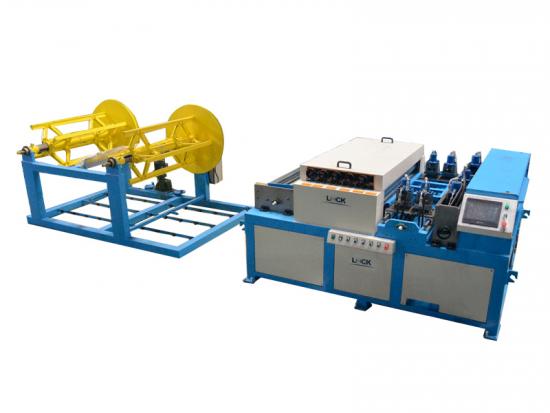
Manufacturing spiral duct requires specialized equipment. An Air Duct Machine Line forms continuous spiral seams from flat steel coil, producing consistent round sections at high speed. This automated process ensures dimensional accuracy across long production runs, reducing material waste and labor costs.
Rectangular ducts serve a different purpose. They fit into tight ceiling and wall spaces where round ducts cannot go. Fabricators build them to match project drawings exactly, accommodating beams, pipes, and other obstructions. This custom fitting makes rectangular duct the practical choice for retrofits and densely packed mechanical rooms.
However, rectangular ducts carry efficiency penalties. Sharp corners create turbulence that increases pressure drop. Multiple seams and flanges raise leakage rates, allowing conditioned air to escape before reaching its destination. Undersized rectangular duct restricts airflow further, compounding efficiency losses.
Installation costs vary by specification. Basic uninsulated spiral duct in exposed ceilings runs $12–$18 per linear foot. Adding insulation, liners, or specialty fittings raises the range to $18–$25 per linear foot. The overall spiral duct range spans $12–$25 per linear foot, with a derived average near $18.50 per linear foot. Rectangular duct costs depend heavily on the complexity of custom fabrication, so you should request project-specific quotes.
Custom fabrication shines when standard sizes fail to match your layout. Pre-assembled custom sections reduce installation delays and field labor. You gain a duct system engineered precisely for your space, rather than forcing standard components into awkward configurations.
Your choice between spiral and rectangular ultimately depends on your building's constraints. Open spaces with exposed ceilings favor spiral for efficiency and aesthetics. Tight spaces with limited clearance demand rectangular or custom solutions. Evaluating your project's airflow requirements, budget, and installation conditions against these options leads you to the right HVAC Duct Manufacturing Solutions. A manufacturer with expertise in both approaches helps you optimize performance while controlling costs.
The quality of your duct system begins with raw materials and the machinery that shapes them. You cannot compensate for poor fabrication with field adjustments. Precision manufacturing directly determines leakage rates, airflow efficiency, and system longevity.
Your material choice dictates corrosion resistance, durability, and cost. Galvanized steel offers good protection in moderate environments, but its zinc coating wears through when scratched or exposed to moisture and chlorides. Stainless steel provides superior corrosion resistance through a self-repairing passive chromium oxide layer, making it ideal for food processing, healthcare, and coastal installations. Aluminum resists moisture naturally and weighs less, yet it dents easily and lacks the structural strength of steel.
|
Material |
Corrosion Resistance |
Durability/Lifespan |
Key Limitation |
|---|---|---|---|
|
Galvanized Steel |
Good in moderate environments; fails when zinc coating is scratched or wet for long periods |
Long in mild, dry environments; shorter in coastal/chemical exposure |
Zinc coating wears through, exposing steel to rust |
|
Stainless Steel |
Superior; self-repairing passive layer; chlorides can cause pitting in wrong grade |
Very long in aggressive or sanitary environments |
Higher upfront cost; pitting risk in chloride-heavy areas |
|
Aluminum |
Naturally corrosion resistant to moisture; lighter weight |
Less durable than steel; dents easily |
Dents easily; costs more than galvanized |
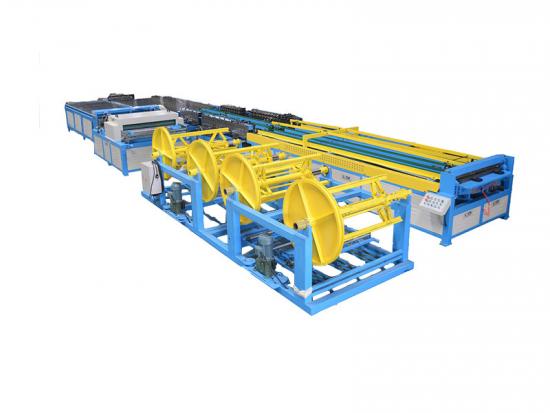
A steel coil cutting machine processes raw coil stock into precise flat blanks before forming. This equipment ensures consistent dimensions across production runs, reducing waste and preparing material for the next fabrication stage.
Modern duct manufacturing relies on automated systems rather than manual labor. A CNC duct fabrication machine line controls every process step through computer numerical control, delivering consistent precision that manual shearing cannot match. Manual cutting achieves ±2 mm tolerance under ideal conditions; CNC systems hold ±0.5 mm or better. Fiber laser cutters reach ±0.1 mm accuracy.
This precision translates directly to system performance. Accurate duct fabrication reduces air leakage and ensures proper airflow distribution. Automated equipment also lowers labor costs and material waste while increasing production speed.
SMACNA standards govern commercial duct construction and installation. Key publications include:
Pre-fabrication in the shop reduces field labor significantly. Factory-built sections arrive ready for installation, minimizing on-site adjustments. This approach shortens project timelines and improves quality control. When you evaluate HVAC Duct Manufacturing Solutions, prioritize manufacturers who invest in automated fabrication lines and comply with SMACNA standards. Their precision equipment produces tighter ducts with lower leakage classes, saving energy over the system's lifetime.
You now understand the manufacturing processes and material options. The next step involves applying that knowledge to your specific project. A structured evaluation framework helps you match duct type to your building's real constraints.
Start with airflow requirements. The volume of air your system must move determines the duct cross-section needed. Higher airflow demands larger ducts or higher velocities, and each choice carries trade-offs. Mechanical engineers use aspect ratio as a primary decision criterion when comparing duct shapes. The table below shows how different geometries perform under identical conditions.
|
Decision Criterion |
Spiral/Round |
Rectangular |
Flat Oval |
|---|---|---|---|
|
Static pressure loss (same velocity) |
Baseline (reference) |
+19% at 1:1 aspect ratio; +46% at 3:1 |
+3% to +17% depending on aspect ratio |
|
Perimeter increase (same pressure loss) |
Baseline |
+15% at 1:1; +33% at 3:1 |
+3% to +16% depending on aspect ratio |
|
Section length |
12 ft or longer |
4–6 ft (more joints, more leakage sites) |
12 ft or longer |
|
Noise containment (low frequencies) |
Best |
Poor (allows breakout noise) |
Good (similar to round) |
|
Installed cost |
Lower |
Higher (especially at high aspect ratios; 4:1 costs 30% more than 1:1) |
Lower than rectangular |
Round spiral duct serves as the energy-efficiency baseline. Rectangular duct increases static pressure loss by 19% at a 1:1 aspect ratio and by 46% at a 3:1 ratio. That means your fan works harder and consumes more electricity. Rectangular sections also run only 4–6 feet long, creating more joints and more potential leakage sites. Spiral sections reach 12 feet or longer, reducing connection points.
Budget considerations extend beyond material cost. Higher pressure loss forces you to specify larger fans and more insulation, increasing both capital and operating expenses. Rectangular duct at a 4:1 aspect ratio costs 30% more than a 1:1 ratio, so extreme space constraints carry a real price penalty. Flat oval offers a middle ground, performing better than rectangular in pressure loss and noise while remaining slightly worse than round.
Project size matters too. Large open spaces with exposed ceilings favor spiral duct for its lower pressure drop and cleaner installation. Smaller, densely packed mechanical rooms may leave you no choice but rectangular or custom fabrication. A steel coil cutting machine prepares precise blanks for either approach, ensuring consistent dimensions before forming begins.
Physical space often dictates your duct selection before cost does. Measure ceiling plenums, wall chases, and equipment rooms carefully. Round duct requires more vertical clearance than flat oval or rectangular options. When beams, pipes, and conduits crowd the ceiling, rectangular duct fits into the remaining gaps. Flat oval provides a compromise, offering better airflow than rectangular while fitting tighter spaces than round.
Acoustic requirements influence the decision as well. Low-frequency noise breakout plagues rectangular duct because flat panels vibrate and radiate sound. Spiral and flat oval contain low-frequency noise effectively. Hospitals, schools, and offices with strict noise criteria should prioritize round or flat oval sections.
Compliance with SMACNA standards governs fabrication quality and installation practices. Your manufacturer must demonstrate adherence to these industry benchmarks. An Air Duct Machine Line produces continuous spiral seams with consistent quality, meeting leakage class requirements reliably. For rectangular work, a CNC duct fabrication machine line ensures precise cuts and folds, holding tolerances that field fabrication cannot match.
Pre-fabrication reduces on-site labor and quality variance. Factory-built sections arrive ready to install, minimizing field adjustments and shortening project timelines. When you evaluate HVAC Duct Manufacturing Solutions, request documentation of the manufacturer's equipment and quality control procedures. Ask about their compliance testing and leakage verification methods.
Your final decision balances airflow performance, spatial constraints, acoustic requirements, and budget. No single duct type wins every category. A manufacturer with diverse fabrication capabilities helps you optimize across all criteria, delivering a system that performs efficiently for decades.
Your ductwork choice hinges on measurable trade-offs. Spiral duct delivers lower pressure drop and tighter leakage class, while rectangular fits constrained spaces. Material selection determines corrosion resistance and lifespan. Advanced fabrication and pre-fabrication reduce field labor and improve precision.
The best solution depends on your project's unique interplay of size, budget, and performance needs. No single option wins every category.
Contact Lockforming Machinery for a consultation and custom quote. Their expertise in automated fabrication and SMACNA compliance can save you significant time and money. You gain a high-performance, durable HVAC system engineered for your specific building.
Your building's energy goals and air quality requirements determine the leakage class. SMACNA standards define acceptable leakage levels for different system types. Spiral duct achieves Class 6 leakage with its single continuous seam. Rectangular systems typically reach Class 12 when properly sealed. Your mechanical engineer should specify the required class.
Coastal environments expose ductwork to salt-laden moisture that corrodes galvanized steel quickly. Stainless steel offers superior corrosion resistance through its self-repairing passive layer. Aluminum resists moisture naturally but dents easily. For aggressive coastal conditions, stainless steel provides the longest service life despite its higher upfront cost.
Pre-fabricated duct sections arrive ready for installation, eliminating most field adjustments. Factory-built components reduce on-site labor significantly and shorten project schedules. A steel coil cutting machine ensures precise blanks before forming, so sections fit together correctly the first time. This approach also improves quality control compared to field fabrication.
Automated systems replace manual fabrication in modern shops. An Air Duct Machine Line forms continuous spiral seams from flat steel coil, producing consistent round sections at high speed. CNC duct fabrication machine lines control every process step with computer precision, holding tolerances of ±0.5 mm or better. This equipment ensures consistent quality across production runs.
Spiral duct in exposed ceilings ranges from $12 to $25 per linear foot depending on insulation and fittings. Rectangular duct costs depend heavily on custom fabrication complexity. At a 4:1 aspect ratio, rectangular duct costs 30% more than a 1:1 ratio. Request project-specific quotes for accurate comparisons.
online service



 IPv6 network supported