
Automation offers a clear path forward. A fully-automatic duct making line transforms your production floor, reducing reliance on scarce skilled labor while boosting consistency. Market projections confirm this shift. The automatic ducting machine market grows from USD 1.90 billion in 2025 to USD 3.02 billion by 2036, a 4.3% CAGR.
Smart production takes this further. An HVAC fabricate duct complete line integrates software and machinery for seamless workflows. These systems minimize human error and accelerate design-to-production cycles.
A duct making machine line equipped with IoT sensors enables real-time monitoring and predictive maintenance. These technologies position you to thrive amid industry transformation.
The case for automation rests on three economic pillars that directly affect your bottom line. Labor cost reduction stands first. Manual duct fabrication demands skilled sheet metal workers, and their wages keep climbing. A fully-automatic duct making line eliminates repetitive tasks like cutting, bending, and seam formation. You no longer compete for scarce craftspeople. Regulatory compliance follows closely. Government sustainability standards now mandate energy-efficient manufacturing processes. Automated equipment meets these requirements while cutting energy consumption. Environmental sustainability completes the trio. Automation reduces emissions and minimizes scrap waste, aligning with global climate efforts and delivering long-term savings through reduced material loss.
Consider the financial math. A 5-station rectangular duct production line typically pays for itself within 18 to 24 months. Eliminating two operator positions at a $25 per hour burdened rate yields approximately $100,000 in annual labor savings. That figure covers equipment costs once you factor in depreciation and maintenance. Smaller shops see returns even faster. High-volume producers recover their investment in 2 to 6 months, while smaller operations achieve payback within 6 to 10 months. Across all shop sizes, the general range spans 2 to 12 months.
The skilled labor shortage in sheet metal fabrication is not easing. Automated duct fabrication machines directly offset this gap by handling physically demanding, repetitive work. Your remaining skilled workers shift to higher-value activities: layout planning, quality control, and installation oversight. The machine's repeatability reduces rework, which compensates for a limited workforce by increasing throughput and consistency. Automated material handling and CAD/CAM programming reduce the need for specialized manual skills. A smaller team can supervise multiple processes simultaneously, maximizing each worker's productivity.
The economic drivers for adoption are clear:
Manual fabrication cannot match consistent tolerances at scale. An HVAC fabricate duct complete line integrates software and machinery to deliver measurable gains. Production speed increases by 30 percent, while production costs drop by 25 percent. These figures come from real installations, not theoretical projections.
Optimized cutting paths directly improve both speed and accuracy. Advanced 3D modeling provides real-time visual verification before cutting begins, catching errors that manual methods would miss. The software calculates the most efficient material layout, reducing waste and cycle time simultaneously.
A duct making machine line equipped with these capabilities transforms your production floor. You achieve tolerances that satisfy the most demanding specifications, run longer shifts without quality degradation, and respond to customer requests faster than competitors relying on manual methods. The precision advantage compounds over time. Fewer defects mean less rework, which frees capacity for new orders. Faster production means shorter lead times, which wins contracts. The combination of speed and accuracy creates a competitive moat that manual shops cannot cross.
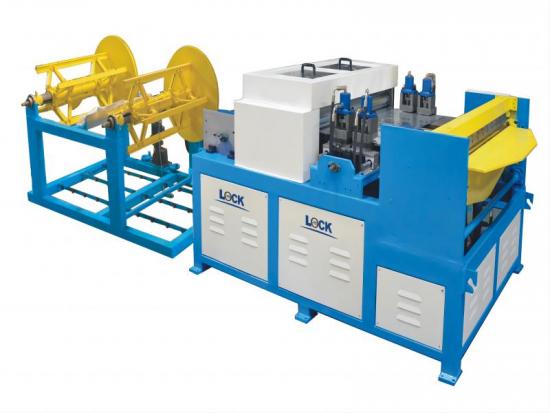
Modern duct fabrication relies on a convergence of hardware and software. These technologies work together to replace manual effort with machine precision. You can see the impact immediately on a production floor equipped with these systems.
Robotic arms and CNC machines form the backbone of automated duct production. These systems handle measuring, cutting, assembling, and installing duct sections with consistent accuracy. A robotic arm positions sheet metal precisely for each operation. CNC machines execute cuts along optimized paths that minimize waste. The result is a dramatic reduction in material scrap and rework.
|
Automation Technology |
Core Application in Duct Manufacturing |
Key Benefit |
|---|---|---|
|
Robotics & Drones |
Measuring, cutting, assembling, and installing duct sections |
High precision, speed, reduced human error, improved installation accuracy |
|
BIM Software |
3D modeling, coordination, clash detection, and visualization of duct layouts |
Accurate designs, conflict identification, optimized installation sequences |
|
Smart Duct Systems (Sensors, Actuators, IoT) |
Real-time monitoring of airflow, temperature, and energy consumption; automated dampers for zoning |
Optimized energy efficiency, reduced waste, centralized control via BMS integration |
A fully-automatic duct making line integrates these robotic systems into a single workflow. You load raw material at one end. Finished duct sections emerge at the other. The line handles cutting, bending, seam formation, and flanging without manual intervention. This integration boosts throughput substantially while maintaining tight tolerances throughout long production runs.
The precision gains matter most for complex duct geometries. Robotic systems repeat the same motion thousands of times without fatigue. Manual workers cannot match this consistency, especially during extended shifts. CNC machinery also enables nesting algorithms that arrange parts on a sheet for maximum material utilization. You reduce waste by up to 15 percent compared to manual layout methods.
Software integration transforms isolated machines into a connected production system. CAD software creates detailed 3D models of duct layouts. These models include every dimension, angle, and connection point. BIM software takes this further by enabling coordination and clash detection. You identify conflicts between ductwork and other building systems before fabrication begins. This prevents costly errors on the job site.
CAM software converts design models into machine instructions. The software calculates optimal cutting paths and bending sequences automatically. You eliminate the manual programming that once consumed hours of skilled labor. PLC controllers then execute these instructions across the production line. They coordinate the timing of each operation, ensuring smooth material flow from station to station.
By leveraging the power of sensors, controllers, and Internet of Things (IoT) technologies, HVAC building automation systems not only boost energy savings but also pave the way for healthier, more productive workspaces.
This software ecosystem reduces human error at every stage. Design changes propagate automatically through the system. You update a dimension in CAD, and the CAM program regenerates the machine instructions. The PLC adjusts the production sequence accordingly. Manual methods require re-programming and re-measuring, which introduces mistakes and delays.
The integration also enables real-time visibility into production status. You monitor each machine's output, detect bottlenecks, and adjust schedules dynamically. This data-driven approach to HVAC Duct Manufacturing ensures you meet customer deadlines consistently. The combination of robotics, CNC machinery, and advanced software creates a production environment where quality and speed reinforce each other.
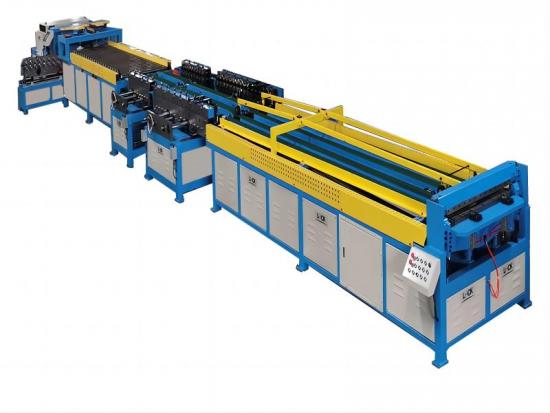
Industry 4.0 transforms your duct fabrication facility from a collection of machines into an intelligent ecosystem. Smart production connects every component of your operation, enabling decisions based on live data rather than intuition. This shift delivers tangible benefits: reduced downtime, optimized schedules, and consistent quality.
IoT sensors on your duct fabrication equipment provide continuous visibility into machine health. These sensors detect subtle changes in vibration patterns of mechanical components like fans, motors, and compressors. You identify shaft misalignment, worn-out bearings, or loose parts before they cause catastrophic failure. Targeted repairs happen during planned maintenance windows, not emergency shutdowns.
Electrical current monitoring reveals early signs of motor strain or winding degradation. Sudden spikes or gradual increases in current draw signal developing problems. Pipe pressure sensors in hydronic systems detect pump failures, leaks, or blockages. Differential temperature sensors evaluate heat exchange efficiency across coils and ducts, flagging refrigerant or airflow issues that compromise duct performance.
The predictive maintenance workflow follows a clear sequence:
Targeted Data Collection – Sensors placed on critical components continuously monitor temperature, differential pressure, airflow rates, and electrical current.
Reliable Data Transmission – Controllers process local data and execute threshold-based logic for immediate response, while gateways securely transmit information to your central platform.
AI-Powered Analysis – The platform detects deviations in real time. A gradual increase in motor vibration forecasts bearing failure days before visible symptoms appear.
Automated Alerts and Action – High-risk issues generate detailed alerts specifying the component, fault nature, and recommended action timeframe. Integration with your building management system enables automated workflows.
This approach minimizes unplanned downtime dramatically. You schedule maintenance based on actual equipment condition, not arbitrary calendars.
A connected factory floor unifies your production data into actionable intelligence. An HVAC fabricate duct complete line integrates every station into a single networked system. You monitor output, track material flow, and identify bottlenecks in real time.
Data analytics optimizes your production schedules dynamically. When one line slows down, the system reallocates resources to maintain throughput. Quality control becomes proactive rather than reactive. Sensors detect dimensional deviations during production, allowing immediate correction before defective parts accumulate.
The connected factory also enhances your responsiveness to customer demands. You track order status precisely, provide accurate delivery estimates, and adjust priorities based on changing requirements. This data-driven approach transforms your entire operation into a competitive advantage that manual facilities cannot replicate.
The global HVAC air ducts market reflects this transformation. It reaches USD 4.71 billion in 2026 and grows to USD 6.18 billion by 2035. This steady expansion signals sustained demand for advanced duct solutions. Manufacturers who adopt emerging technologies position themselves to capture this growth.
Smart duct technologies embed sensors directly into ductwork. These sensors monitor airflow, temperature, and pressure continuously. The data flows to your building management system through IoT connectivity. You gain real-time visibility into system performance. Predictive maintenance becomes possible because the system flags anomalies before failures occur. This approach prevents energy inefficiencies and extends equipment life.
Polymer-based duct systems represent another breakthrough. Products like those from Rehau Group offer lightweight construction with excellent corrosion resistance. These materials resist degradation from moisture and chemicals. Your ducts maintain their structural integrity longer. System longevity improves, and efficiency stays consistent throughout the duct's service life.
The material evolution continues with nanomaterial-based ducts. These advanced composites feature self-regulating airflow properties. Bio-based, fully recyclable materials are entering the market as sustainability demands intensify. A fully-automatic duct making line can process these new materials with the same precision as traditional metals. Your production capabilities remain future-proof as material science advances.
|
Trend Category |
2020-2024 Baseline |
2025-2035 Projection |
|---|---|---|
|
Technology |
Lightweight polymer ducts for efficiency |
AI-driven intelligent climate control and smart airflow regulation |
|
Materials |
High-performance polymers for weight reduction |
Nanomaterial-based ducts with self-regulating airflow; bio-based recyclable materials |
|
Manufacturing |
Traditional production with supply chain disruptions |
3D printing, digital twins, AI-driven inventory management |
|
Sustainability |
Low-emission components and improved recyclability |
Carbon-neutral manufacturing with fully recyclable materials |
Application segments reveal where demand concentrates. Each sector requires distinct duct characteristics:
Modular design principles reshape how you approach duct fabrication. Prefabricated sections reduce on-site installation time dramatically. An HVAC fabricate duct complete line produces standardized modules that assemble quickly. You customize each module through software parameters rather than manual adjustments. This approach supports the growing demand for zoned climate control in smart buildings.
The trend toward customization extends to production equipment itself. A duct making machine line with flexible tooling adapts to varying duct geometries without lengthy changeovers. You respond to diverse customer requirements while maintaining production efficiency. This adaptability becomes your competitive advantage in a market that increasingly values tailored solutions.
Automation transforms your workforce as much as your production floor. The operator who once bent metal by hand now oversees a Fully-automatic duct making line. This shift demands new competencies. Your team must understand programming logic, machine diagnostics, and quality metrics. The transition feels challenging, yet it opens pathways to higher-value work.
The reskilling imperative starts with recognizing what changes. Manual fabrication relies on physical skill developed over years. Automated systems require technical oversight instead. Your workers learn to monitor machine parameters, interpret sensor data, and respond to alerts. They become system supervisors rather than hands-on fabricators.
This transition benefits both you and your employees. Workers move from repetitive, physically demanding tasks to roles involving systems oversight, programming, and complex problem-solving. These positions offer greater job security and advancement potential. You gain a workforce capable of managing multiple processes simultaneously. A single technician can supervise several stations on an HVAC fabricate duct complete line, maximizing productivity without adding headcount.
Training programs must emphasize digital and AI literacy alongside traditional mechanical skills. Your team needs to understand how artificial intelligence supports their work. AI-driven data collection helps personnel refine techniques, innovate new fabrication methods, and tailor solutions to customer needs. This human-AI synergy fosters continuous improvement rather than replacement anxiety.
Building a learning culture requires deliberate investment. Develop online training programs and certifications focused on new technologies. A.O. Smith University demonstrates this approach effectively. Their platform offers structured courses on smart HVAC setups, filling the knowledge gap between traditional skills and modern requirements. You can create similar programs tailored to your equipment and processes.
Retention depends on visible career pathways. Experienced employees stay when they see advancement opportunities. Younger generations seek employers who invest in their development. Continuous training addresses both concerns. A Duct making machine line operator who learns predictive maintenance techniques becomes more valuable. That growth translates into higher compensation and greater responsibility.
Partnerships with technology providers accelerate this upskilling. Equipment manufacturers offer training during installation and ongoing support as systems evolve. These partnerships ensure your team's skills remain current as software updates introduce new capabilities. The investment in people matches your investment in machinery. Both deliver returns through increased efficiency, reduced downtime, and consistent quality. Your workforce becomes your competitive advantage in the smart factory era.
Automation adoption requires a structured approach. You cannot simply purchase equipment and expect transformation. A systematic evaluation of your current operations reveals where automation delivers the greatest impact. This assessment guides your investment decisions and ensures you allocate capital effectively.
Start with a production audit. Document your current throughput, defect rates, and labor allocation across each fabrication stage. Identify bottlenecks where manual work slows your output. Measure your material waste percentage. These baseline metrics help you quantify the potential return from automation.
Next, evaluate your facility's physical infrastructure. A duct making machine line requires adequate floor space, power supply, and material handling systems. Consider your existing workflow layout. Automated equipment integrates most smoothly when you can arrange stations in a logical sequence. Review your workforce capabilities as well. Identify employees who demonstrate aptitude for technical oversight. These individuals become your automation champions during implementation.
Finally, assess your order volume and product mix. Automation delivers the strongest returns when you produce consistent, repeatable duct geometries at scale. If your orders vary significantly, look for flexible equipment that handles multiple configurations. This analysis positions you to select machinery that matches your actual production needs rather than generic solutions.
Lockforming Machinery offers equipment designed for measurable ROI and scalable growth. The Auto Duct Production Line 2 operates at a maximum speed of 16m/min with a length error of ±0.5mm and a diagonal error of ±0.8mm. A closed-loop feedback system, controlled by an automatic computer controller, maintains this precision throughout long production runs. This accuracy reduces material waste and rework costs directly.
The fully automatic integration handles feeding, leveling, beading, notching, shearing, and folding. One operator manages the entire line, cutting labor expenses substantially. Servo-driven motors with an energy-saving system lower power consumption. The equipment meets international standards including SMACNA, DW144, and ASHRAE, enabling export readiness and market expansion.
Customer installations demonstrate real-world results. A Saudi Arabia facility received a complete duct production line with machine selection tailored to production capacity, factory space, duct type, and investment budget. A UAE installation achieved increased productivity, reduced labor requirements, and improved accuracy. These outcomes reflect the broader transformation possible in HVAC Duct Manufacturing.
Lockforming's support structure ensures successful implementation. Their team provides installation guidance, operator training, remote technical support, spare parts service, and preventive maintenance planning. Long-term consultation helps you optimize production and plan factory expansion. This partnership approach means you gain not just equipment but ongoing expertise that sustains your competitive advantage.
Automation and smart production are no longer optional advantages. They represent survival essentials in HVAC duct manufacturing. You face rising labor costs, precision demands, and sustainability requirements. A Fully-automatic duct making line addresses each challenge directly.
The benefits form your foundation for future growth. Efficiency reduces operational costs. Precision minimizes material waste. Adaptability lets you respond to market shifts quickly. These pillars support a resilient business model.
You must act now. Invest in new technologies, upskill your workforce, or consult industry leaders. An HVAC fabricate duct complete line transforms your production capabilities. A Duct making machine line with IoT integration positions you for long-term success.
The industry rewards innovators. Those who embrace this transformation will lead the market. Those who hesitate will struggle to compete. Your competitors are already modernizing their facilities. The time to secure your advantage is today.
Most operations recover their investment within 2 to 12 months. High-volume producers see returns in as little as 2 months. Smaller shops typically achieve payback within 6 to 10 months. Labor savings alone often cover equipment costs within two years.
The Auto Duct Production Line 2 operates at a maximum speed of 16 meters per minute. It maintains a length error of ±0.5mm and a diagonal error of ±0.8mm. This precision holds throughout extended production runs without quality degradation.
Yes. Modern systems use CAD, CAM, and PLC controllers that connect directly to your design software. Design changes propagate automatically through the system. You update a dimension in CAD, and the machine instructions regenerate instantly. This eliminates manual reprogramming and reduces human error.
Your team shifts from hands-on fabrication to technical oversight. Workers learn machine diagnostics, parameter monitoring, and sensor data interpretation. Equipment manufacturers provide installation training and ongoing support. A single technician can supervise multiple stations on a Duct making machine line after proper training.
Automated systems reduce material waste through optimized cutting paths and nesting algorithms. You cut scrap by up to 15 percent compared to manual layout methods. Energy-efficient servo motors lower power consumption. These improvements align with government sustainability standards while reducing operational costs.
online service



 IPv6 network supported