
Ductwork is one of the most important components in HVAC systems. It directly affects airflow efficiency, installation cost, space utilization, and overall system performance.
Among different duct types, rectangular ducts and spiral ducts are the two most commonly used solutions in commercial and industrial HVAC projects.
So, which one is better?
The answer depends on the project requirements, installation environment, airflow needs, and manufacturing capability.
In this article, we will compare rectangular ducts and spiral ducts to help HVAC professionals choose the right solution.
Rectangular ducts are traditional HVAC ductwork with a rectangular cross-section.
They are widely used in:
Rectangular ducts are usually manufactured from galvanized steel sheets and connected through:
Modern duct factories use automatic duct production lines to improve efficiency and accuracy.
Spiral ducts are round ducts manufactured by forming metal strips into a spiral shape.
They are commonly used in:
Spiral ducts are produced using spiral duct machines and offer excellent airflow performance.
Because of its round shape, spiral duct provides smoother airflow.
Advantages:
✓ Lower air resistance
✓ Reduced pressure loss
✓ Better energy efficiency
Rectangular ducts may create more turbulence because of sharp corners.
However, they are still widely used because they provide better space utilization.
One of the biggest advantages of rectangular ducts is their ability to fit into limited spaces.
For example:
Rectangular ducts can maximize available space.
Spiral ducts require more vertical space because of their round shape.
They are more suitable for:
Modern rectangular duct manufacturing uses:
Benefits:
Spiral duct manufacturing requires:
It provides continuous production with high efficiency.
Spiral ducts usually require less material because of their efficient shape.
However, actual cost depends on:
Spiral ducts are often faster to install because they require fewer connections.
Rectangular ducts may require more assembly work but provide flexibility in complex layouts.
Both duct types can provide excellent durability when manufactured correctly.
Advantages:
Advantages:
The best choice depends on your project.
✓ Space is limited
✓ Large HVAC systems are required
✓ Custom shapes are needed
✓ Commercial buildings are involved
✓ Airflow efficiency is important
✓ Installation speed matters
✓ Open ceiling design is preferred
✓ Industrial ventilation is required
For duct manufacturers, selecting suitable machinery is essential.
A professional HVAC duct factory should consider:
For rectangular duct production, equipment such as:
can significantly improve production efficiency.
For spiral duct production:
is the key equipment.
Both rectangular ducts and spiral ducts play important roles in modern HVAC systems.
Rectangular ducts provide excellent flexibility and space efficiency, while spiral ducts offer better airflow performance and faster installation.
For HVAC manufacturers, choosing the right production equipment is the key to producing high-quality ductwork and staying competitive in the market.
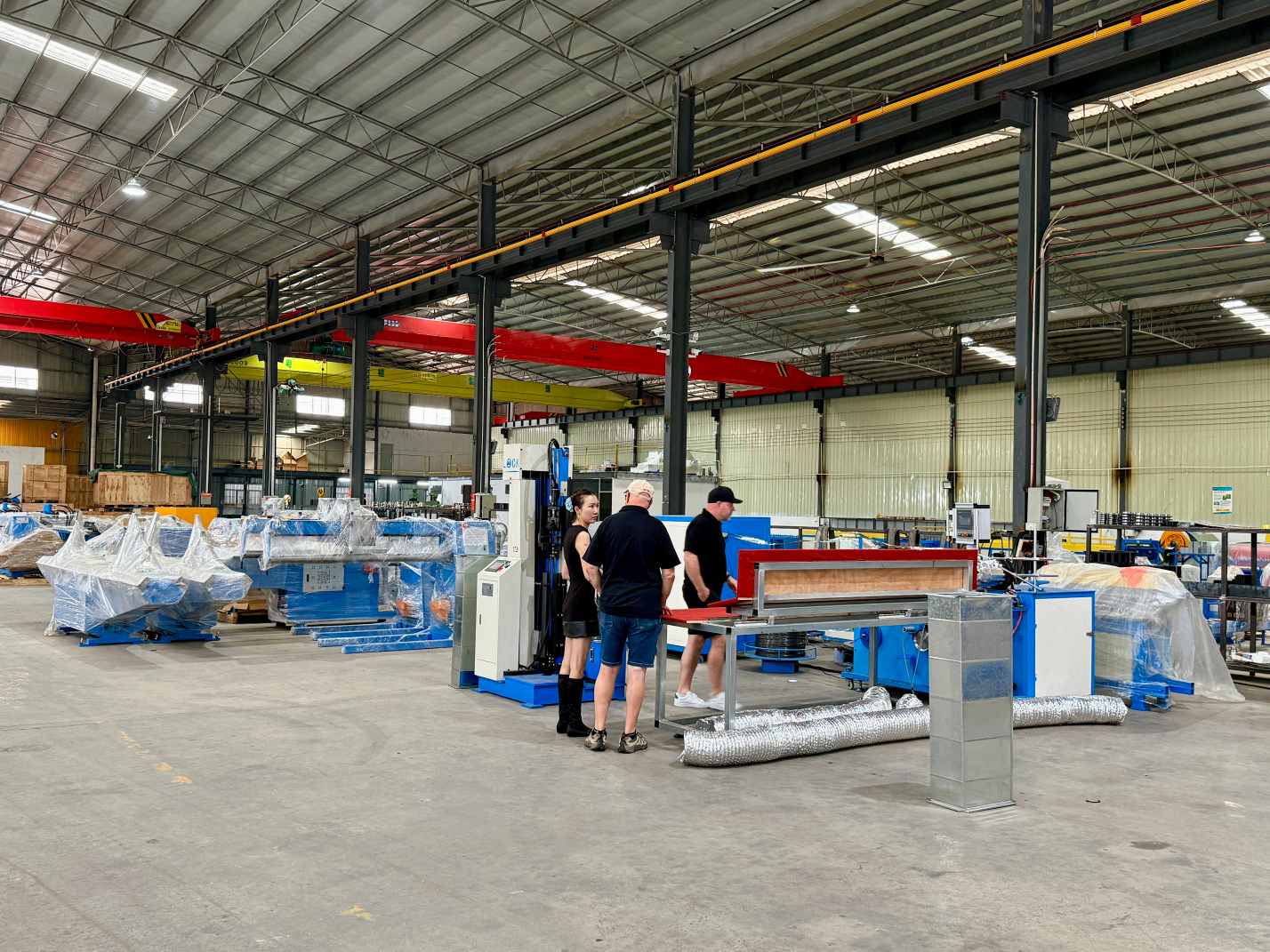
LOCK provides complete HVAC duct manufacturing solutions, including:
With professional manufacturing experience, LOCK helps HVAC companies worldwide improve production efficiency and build reliable duct fabrication workshops.
online service




 IPv6 network supported