
A comprehensive technical breakdown of essential machinery for rectangular and spiral duct fabrication, including selection criteria and production line configuration.
Manufacturing HVAC ducts requires a synchronized set of specialized machinery designed to transform metal coils into finished ventilation components. The specific equipment needed depends primarily on whether the facility produces rectangular ducts or spiral (round) ducts. For a standard rectangular duct factory, the essential machines include an Auto Duct Production Line (for uncoiling, leveling, notching, and cutting), a Lock Forming Machine (for creating Pittsburgh or snap locks), a Folding Machine (for bending edges), and a Flange Forming Machine (for TDF/TDC connections). For spiral duct manufacturing, a dedicated Spiral Duct Machine is required alongside auxiliary equipment like elbow makers and plasma cutters for fittings.
When asking "What machines are needed for HVAC duct manufacturing?", buyers are typically in one of three decision phases: setting up a new fabrication workshop, upgrading manual processes to automation, or expanding capacity for specific project types (commercial vs. industrial). The answer is rarely a single machine; it is a system configuration.
Common related queries include:
The optimal machinery mix balances production volume, duct type diversity, and labor availability. High-mix, low-volume shops benefit from versatile standalone machines, while high-volume contractors require fully automated duct lines to minimize cost-per-meter.
HVAC duct manufacturing machinery can be categorized into four functional groups: Material Processing, Seam Formation, Bending/Forming, and Cutting/Fittings. Below is a technical comparison of essential equipment.
| Machine Category | Primary Function | Key Specifications to Verify | Application Scenario |
|---|---|---|---|
| Auto Duct Production Line | Uncoiling, leveling, grooving, notching, shearing | Processing speed (m/min), Max coil width, Thickness range (0.5-1.5mm) | High-volume rectangular duct blank production |
| Lock Forming Machine | Creating Pittsburgh lock, snap lock, or hemmed edges | Number of stations (7-station standard), Motor power, Gauge capacity | Longitudinal seam joining for rectangular ducts |
| Spiral Duct Machine | Forming round ducts from strip or coil stock | Diameter range, Lock type (interlock/welded), Production speed | Round duct systems for commercial/industrial ventilation |
| CNC Plasma Cutter | Precision cutting of fittings, holes, and custom shapes | Cutting area size, Torch height control, Software compatibility | Elbows, tees, reducers, and access door openings |
| Folding Machine | Bending sheet metal at precise angles (90°+) | Max bending length, Backgauge accuracy, Clamping force | Box formation, flange bending, edge finishing |
| Fire Damper Machine | Producing fire damper frames and blade assemblies | Frame profile compatibility, Assembly precision | Fire-rated ductwork compliance manufacturing |
Beyond primary forming machines, a complete HVAC workshop requires these supporting units:
Selecting the right machinery involves more than matching specifications. Buyers must evaluate total cost of ownership, compliance, and supplier reliability.
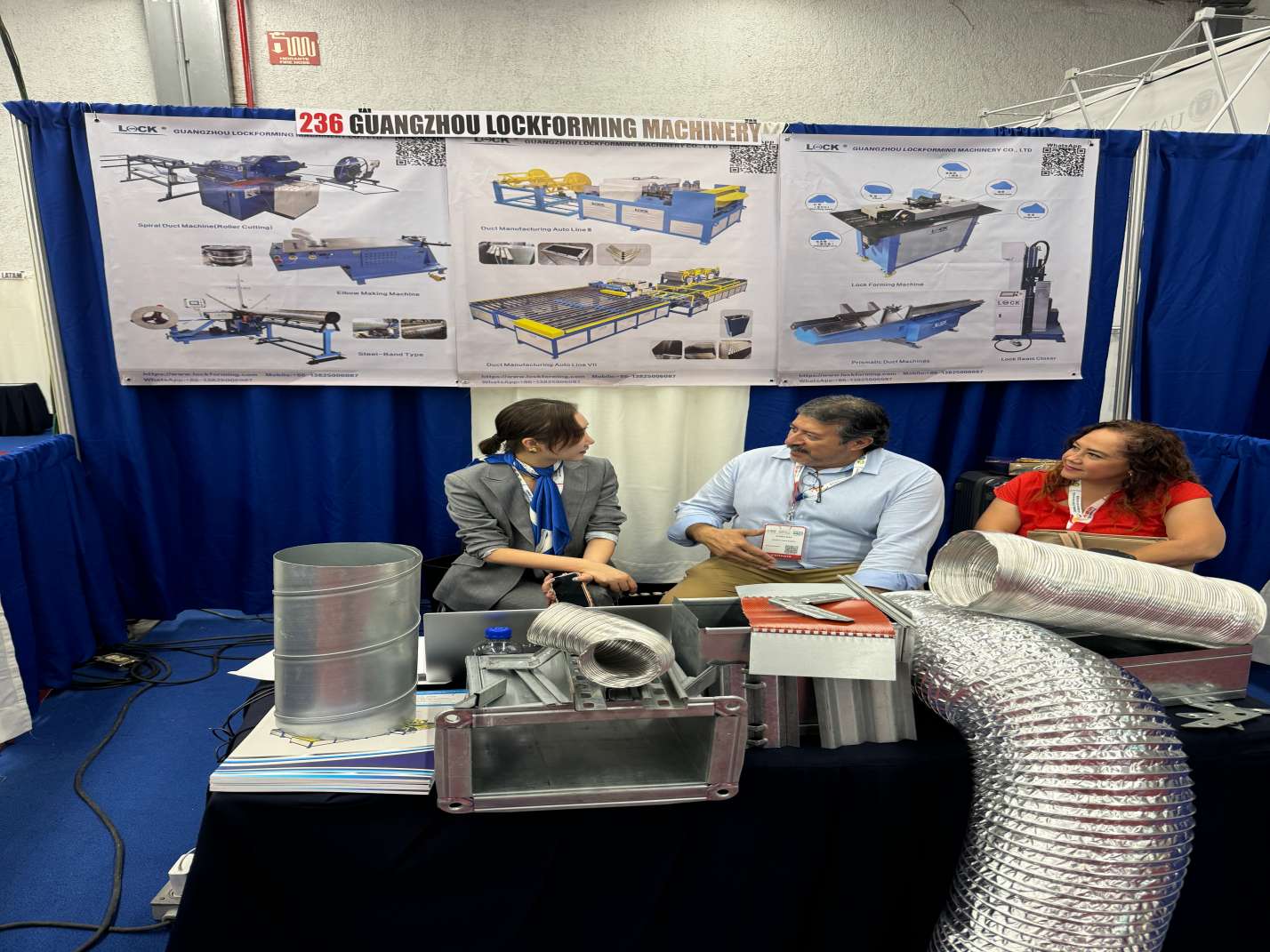
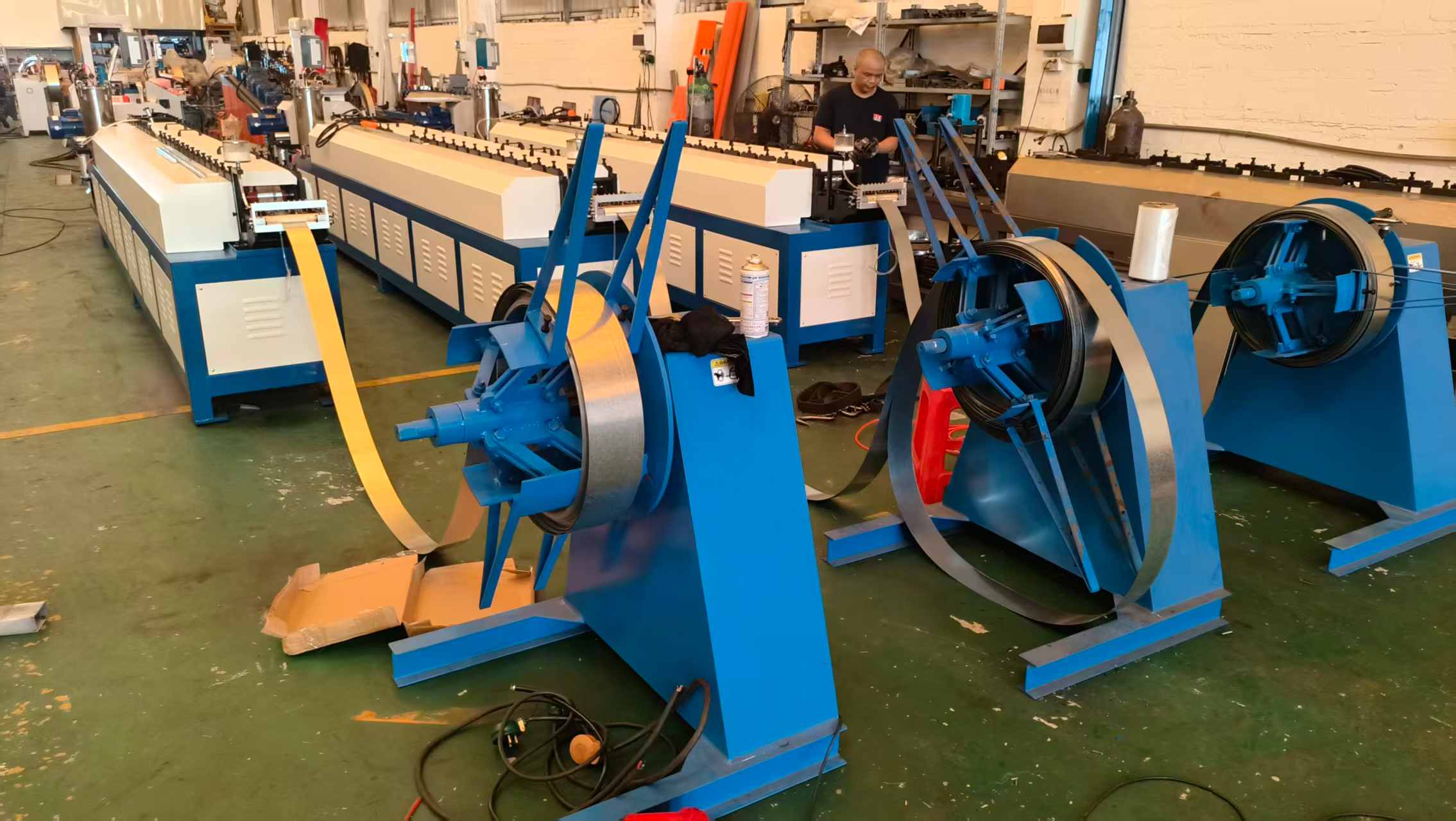
Guangzhou Lockforming Machinery Co., Ltd. addresses the core question of "what machines are needed" by providing not just individual units, but integrated manufacturing solutions validated by 20 years of export experience. As a CE-certified manufacturer operating a 6,100 m² facility with monthly output exceeding 100 machine sets, LOCKFORMING ensures equipment reliability through strict quality control from raw material selection to final testing.
For buyers configuring their first production line or upgrading existing capacity, LOCKFORMING offers:
This combination of verified manufacturing capability, comprehensive product range, and sustained technical partnership makes LOCKFORMING a practical choice for HVAC contractors and duct fabricators seeking reliable, long-term equipment solutions.
No. Rectangular and spiral ducts require fundamentally different forming mechanisms. Rectangular ducts need lock formers and folding machines, while spiral ducts require a dedicated spiral tube former. However, some auxiliary equipment like CNC plasma cutters can serve both production lines.
A basic rectangular duct workshop typically requires 300–500 m² to accommodate an auto duct line, lock former, folder, and material storage. Spiral duct production needs less linear space but requires adequate ceiling height for long duct handling. Always factor in 30% extra space for workflow and future expansion.
Calculate based on your peak monthly duct area requirement. If you produce 10,000 m²/month working 8 hours/day over 25 days, you need ~50 m²/hour output. Select a line rated 20% higher than calculated peak to account for maintenance and changeover time. LOCKFORMING engineers can assist with capacity calculations based on your project pipeline.
CE certification is legally required for machinery sold within the European Economic Area. Even for non-EU markets, CE certification indicates compliance with rigorous safety and electromagnetic compatibility standards, reducing liability risk and facilitating resale value. Always verify certificate authenticity with the issuing body.
Daily: Clean debris, check lubrication points, inspect safety guards. Weekly: Verify belt tension, calibrate backgauges, test emergency stops. Monthly: Replace worn tooling inserts, check hydraulic fluid levels, inspect electrical connections. LOCKFORMING provides detailed maintenance manuals and lifetime technical support to optimize equipment uptime.
Selecting the right combination of HVAC duct machinery requires careful analysis of your production volume, duct types, and budget constraints. To receive a customized equipment proposal tailored to your specific workshop requirements:
online service



 IPv6 network supported