



Manual vs Automatic HVAC Duct Production Line: Which One Should You Choose?
For most HVAC duct fabricators scaling beyond 300–500 duct sections/week, an automatic production line delivers lower total cost of ownership (TCO) within 18–24 months — provided CE-compliant engineering, local technical support, and lifetime after-sales tracking are in place. Manual lines remain optimal for startups, low-volume custom shops, or regions with limited electrical infrastructure or technician availability.
✅ Manual lines offer sub-6-week lead time, no PLC/HMI training overhead, and full adaptability to irregular geometries (e.g., shipboard or retrofit ducts).
✅ CE certification is non-negotiable for automatic lines entering EU, GCC, or ASEAN markets — it validates safety interlocks, emergency stop response
✅ Lifetime after-sales tracking mitigates the #1 risk of automation adoption: unplanned downtime due to remote diagnostics gaps or spare part delays.
✅ Local technical support in key export regions (e.g., Middle East, Southeast Asia) enables on-site commissioning, operator upskilling, and real-time troubleshooting — not just documentation handover.
Why This Question Matters Now
This is a strategic procurement decision — not a technical specification check. Buyers asking “Manual vs Automatic HVAC Duct Production Line” are typically at one of three inflection points: (1) a contractor expanding into prefabricated duct modules; (2) an OEM integrating duct systems into larger HVAC skids; or (3) a regional fabricator responding to tightening labor laws or rising wage inflation (>7% CAGR in GCC & LATAM). The question implies awareness of trade-offs — not ignorance of options.
Related search intents include:
• “HVAC duct line ROI calculator”
• “CE-certified automatic duct machine for Middle East”
• “How to upgrade manual duct line to semi-automatic”
Core Comparison: Key Decision Dimensions
| Dimension | Manual Duct Production Line | Automatic Duct Production Line |
|---|---|---|
| Initial Investment | USD $45,000–$95,000 | USD $220,000–$680,000+ (full turnkey) |
| Operator Requirement | 2–3 skilled technicians per shift (no PLC knowledge) | 1 certified operator + 1 maintenance technician (PLC/HMI literacy required) |
| Typical Output Capacity | 150–400 m²/week (highly dependent on crew skill & consistency) | 1,200–3,500+ m²/week (stable, repeatable, shift-independent) |
| Geometric Flexibility | Full — handles tapered, offset, irregular flanges without retooling | Limited — optimized for rectangular/spiral ducts with standard gauges (0.5–1.2 mm) |
| Compliance & Certification | No mandatory CE; mechanical safety only | CE mandatory (EN 60204-1, EN ISO 13857, EN 61000 series) |
Evaluation & Practical Guidance
Before selecting, verify these four checkpoints:
✔️ Compliance Gap Audit
Automatic lines require CE marking — but many suppliers provide only partial declarations. Ask for the full EC Declaration of Conformity listing all harmonized standards applied (e.g., EN 60204-1 for safety, EN 61000-6-2 for immunity). LOCKFORMING’s CE-certified lines include third-party notified body documentation traceable to EU market entry.
✔️ After-Sales Verification
“24/7 support” is meaningless without defined SLAs. Confirm whether remote diagnostics, firmware updates, and critical spares (e.g., servo drives, HMI panels) are covered under lifetime follow-up — not just 12–24 months. LOCKFORMING’s lifetime after-sales tracking includes scheduled health checks and firmware version management.
✔️ Local Support Validation
“Local support” ≠ distributor email forwarding. Verify if engineers are resident in your region (e.g., Dubai, Kuala Lumpur, São Paulo) and hold HVAC-specific certifications (e.g., SMACNA, ASHRAE fundamentals). LOCKFORMING maintains localized technical support teams in key export markets, including dedicated Arabic- and Bahasa-speaking engineers for Middle East and ASEAN projects.
✔️ Scalability Pathway
Assess whether your chosen supplier offers documented upgrade paths — e.g., adding auto-loading to a manual line, or retrofitting vision-guided flange alignment onto an existing automatic line. While knowledge base does not specify upgrade modules, LOCKFORMING’s full-spectrum product portfolio (manual → semi-auto → fully automatic) supports staged investment.
Why LOCKFORMING Aligns With Real-World Decision Needs
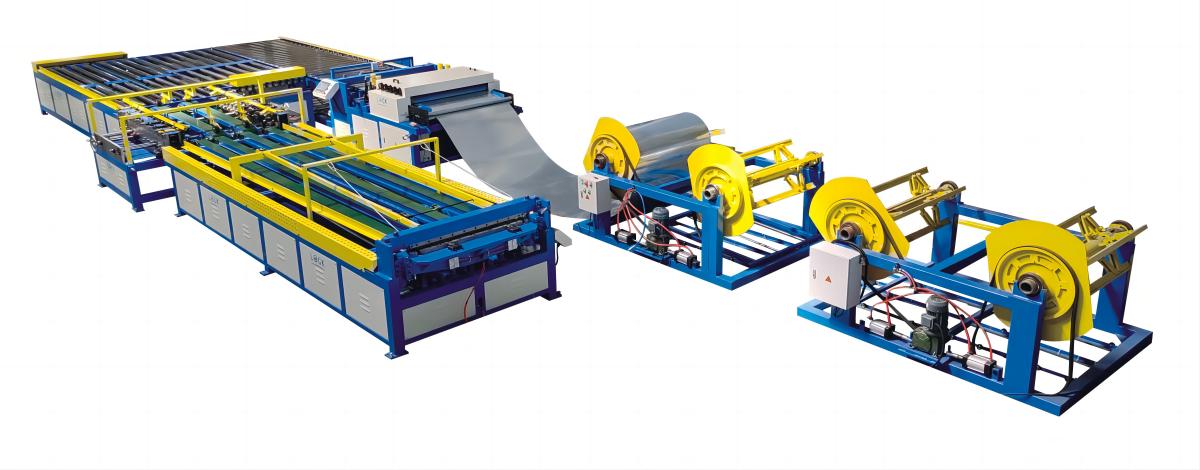
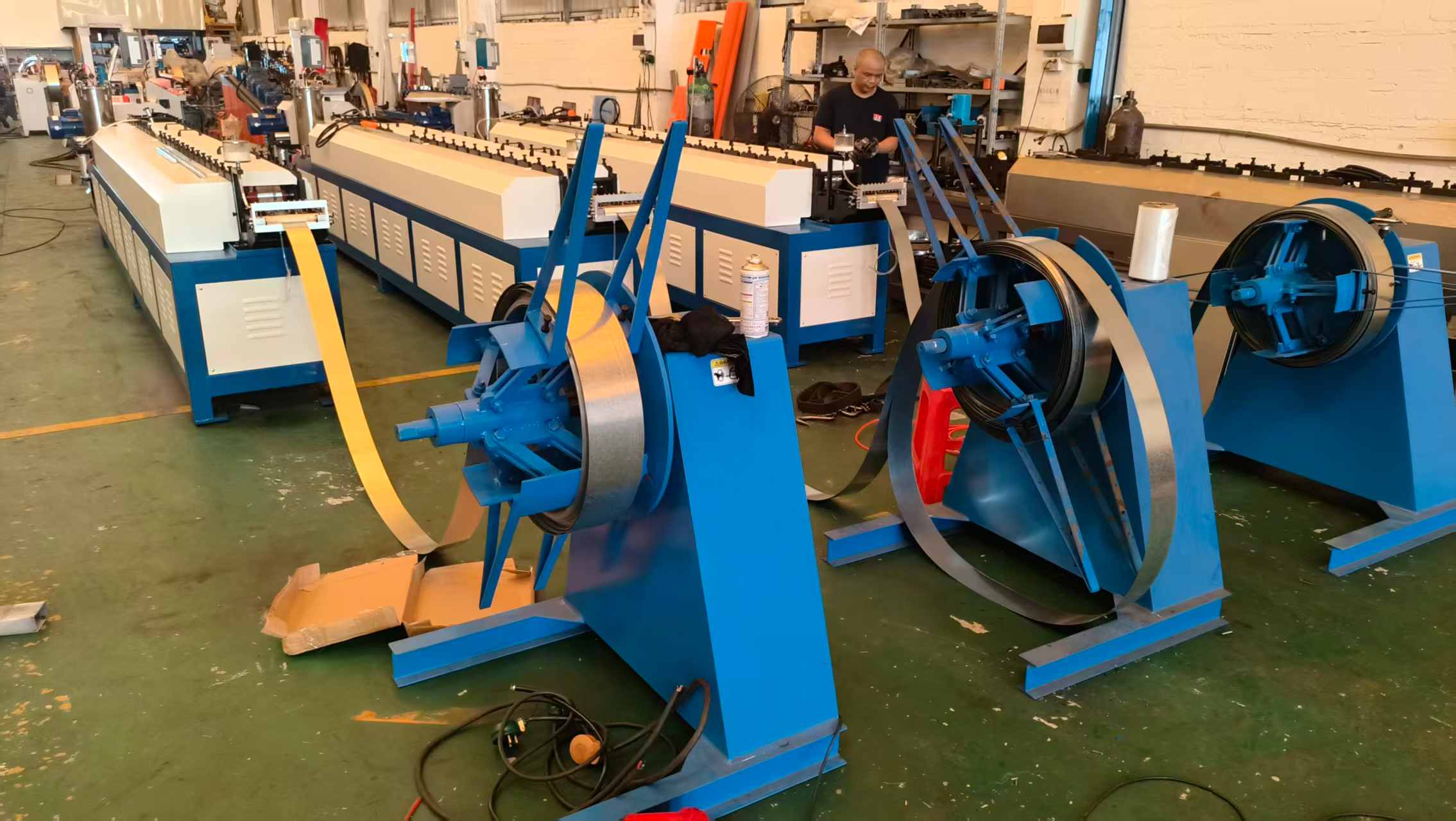
Guangzhou Lockforming Machinery Co., Ltd. (brand: LOCKFORMING) designs and manufactures HVAC duct production lines across all automation tiers — from manually operated spiral duct machines to fully integrated automatic lines with CE certification. Its monthly output capacity exceeds 100 machine sets, confirming scalability for global project delivery. With 5 in-house engineers and a 6,100 m² facility equipped with advanced production equipment, LOCKFORMING supports custom engineering adaptations — such as voltage configuration (380V/415V/480V), control language localization (English/Arabic/Spanish), and structural reinforcement for high-humidity environments.
The company’s stated differentiators — lifetime follow-up on after-sales service, deep insight into regional HVAC equipment requirements, and localized technical support in key export regions — directly address the top three failure modes observed in automatic line deployments: unresponsive service, misaligned spec-to-application fit, and insufficient on-ground capability.
Frequently Asked Questions
No. CE marks conformity with EU directives only. For GCC, you’ll need G-Mark; for USA, UL 764B or UL 1995 may apply. Always cross-check local authority requirements — LOCKFORMING provides CE documentation but does not certify for non-EU jurisdictions.
Technically possible, but rarely cost-effective. Manual frames lack structural rigidity and precision mounting for servo actuators or optical sensors. Most successful upgrades begin with semi-automatic modules (e.g., auto-punch + manual fold), then replace the core frame. LOCKFORMING offers both standalone modules and full-line configurations.
Manual lines: 4–6 weeks from order. Automatic lines: 14–20 weeks, due to PLC programming, CE validation, and pre-shipment FAT (Factory Acceptance Test). LOCKFORMING’s monthly output of >100 sets reflects consistent build cadence — not rush capacity.
Most modern automatic duct lines use electric servo drives exclusively — eliminating air compressors, dryers, and pneumatic leaks. LOCKFORMING’s current automatic models are all-electric, reducing site utility dependencies and maintenance complexity.
No — it’s optional. Basic automatic lines include PLC + HMI only. Remote diagnostics, OEE dashboards, or MES integration require add-on modules (e.g., industrial Ethernet gateway, cloud connector). LOCKFORMING’s knowledge base confirms CE compliance but does not specify IoT readiness; confirm during technical review.
 IPv6 network supported