
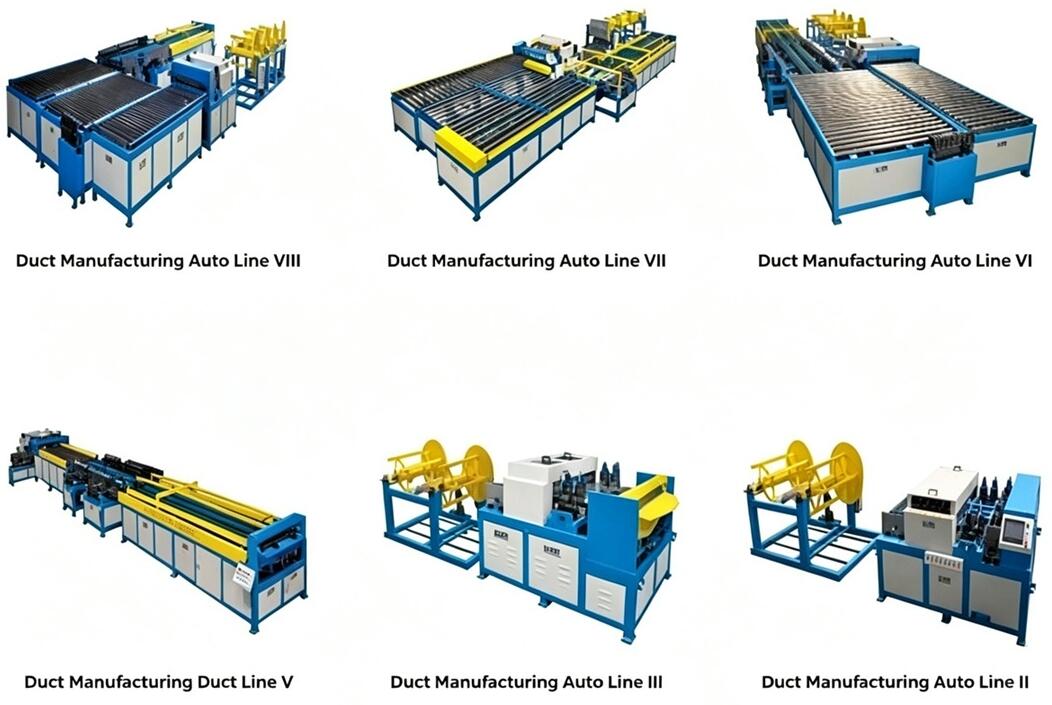
Selecting the right automatic duct line represents a pivotal decision for any HVAC fabrication business. Lockforming offers six distinct models—Line II, III, V, VI, VII, and VIII—but the Roman numerals do not indicate a linear progression. They denote different tiers of production capacity, automation, and application focus.
The global automatic duct line market reached $1.90 billion in 2025, reflecting growing demand for efficient duct fabrication. Each machine serves a specific purpose, from entry-level production to advanced TDF flange systems.
This guide dissects each model's purpose, compares capabilities, and matches lines to specific business profiles. Readers gain a clear path to the right investment.
Lockforming's Roman numeral naming system often confuses buyers. The numerals do not represent a simple 1-to-6 scale of improvement. Instead, they identify distinct tiers of automation and production capacity. Each line targets a specific operational niche within the duct fabrication market.
The industry generally classifies these machines by automation level and duty class. The table below shows how these categories align:
|
Automation Level |
Machine Capacity |
|---|---|
|
Semi-Automatic |
Light-Duty |
|
Fully Automatic |
Medium-Duty |
|
|
Others |
Entry-level models like Line II and III fall into the semi-automatic, light-duty category.
These machines suit small workshops with modest output requirements. Mid-range and flagship models, including Lines V through VIII, represent fully automatic systems built for medium to heavy production demands.
The progression from II to VIII reflects growing sophistication in control systems, material handling, and forming technology.
Buyers should evaluate several criteria before selecting an automatic duct line. Production speed, automation level, material handling capability, floor space requirements, energy consumption, and budget all influence the final decision. Each factor carries different weight depending on the buyer's business model.
Production speed varies significantly across machine classes. Entry-level lines operate at slower speeds appropriate for short custom runs. Standard automatic systems handle regular commercial HVAC production at moderate speeds.
High-volume industrial operations require speeds exceeding 100 meters per hour, though actual output depends on material thickness, coil changes, and downtime.
The evaluation process should also consider these practical factors:
A full automatic duct production line offers significant efficiency gains for high-volume operations. Similarly, HVAC duct manufacturing machines line configurations vary in footprint and complexity.
Buyers must match machine capabilities to their specific production targets. The right choice balances initial cost against long-term value, ensuring the selected system delivers consistent quality without unnecessary expenditure. This analysis guides buyers toward informed decisions about automation investment and operational development.
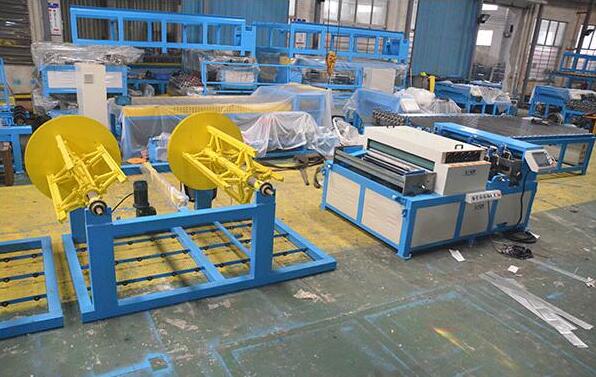
Line II serves as the foundational model in Lockforming's entry-level tier. This machine combines five essential stations into one cohesive system: a coil holder, a coil leveler, a beading station, a notching station, and a shearing station. Each component performs a dedicated role in the duct fabrication sequence. The coil holder secures raw material, while the leveler flattens the metal before forming. The beading station adds structural reinforcement, and the notching station prepares corners for folding. Finally, the shearing station cuts the duct to precise length.
This configuration makes Line II a reliable workhorse for basic duct production. Small fabrication shops benefit from its straightforward operation and modest floor space requirements. Operators can produce standard rectangular ducts without complex programming or extensive training. The machine handles routine jobs efficiently, though it requires manual intervention between stations. For businesses just entering the HVAC market, this automatic duct line offers an accessible starting point. The system delivers consistent quality on standard profiles while keeping initial investment manageable.
Line III builds on Line II's foundation with meaningful upgrades. The key improvement involves automated material transfer between stations. This addition reduces manual handling and speeds up the overall process. Operators no longer need to move partially formed ducts by hand, which cuts labor requirements and minimizes errors. The automated workflow also improves consistency across production runs.
This model suits shops that have outgrown basic equipment but lack the budget for a full automatic duct production line. Line III bridges the gap between manual operation and advanced automation. It delivers measurable gains in throughput without requiring a massive leap in investment. The machine maintains the same compact footprint as Line II, making it practical for existing workshops. Businesses can increase output while keeping operational changes minimal. For growing operations, Line III represents a strategic upgrade that improves efficiency without disrupting established workflows. The lock forming machine retains the core forming technology while adding the automation that modern production demands.
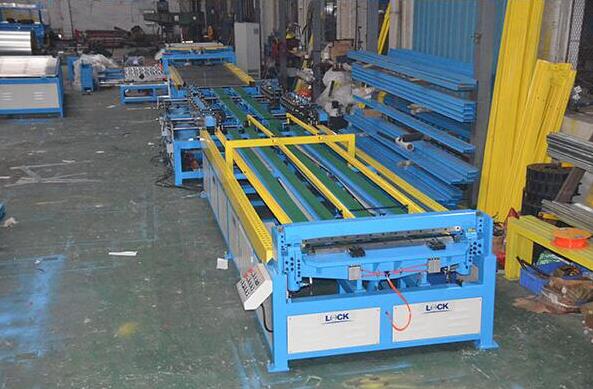
Line V delivers a meaningful step up in performance for growing fabrication businesses. The machine offers greater flexibility for various sizes and profiles. Operators switch between standard rectangular pieces and custom configurations without extensive retooling. This balance between speed and adaptability makes Line V suitable for diverse commercial projects.
An automatic duct line requires continuous output for high-volume fabrication. The U Shape Auto Duct Line 5, which shares design principles with Line V, processes 1000–2500 square meters daily. This rate demonstrates the ability to meet aggressive construction deadlines. Line V handles massive tonnage while maintaining exact dimensional uniformity across thousands of feet of straight runs. The system automates decoiling, seam forming, and flange creation. These features define the high-volume output threshold for commercial fabricators. Consistent output depends on reliable material handling and forming.
Growing businesses benefit from the versatility. Line V adapts to changing project requirements without sacrificing speed. This flexibility reduces the need for multiple units, lowering overall equipment cost. Shops can accept a wider range of contracts without investing in additional machinery. For shops expanding their capacity, Line V delivers reliable performance without overcomplicating operations. Line V provides a clear upgrade path from entry-level models.
Line VI shares core functionality with Line VII but optimizes for standard-sized ducts. The lock forming machine includes fully automatic fixed-size cutting, automatic beading, automatic cutting, automatic notching, automatic Pittsburgh forming, automatic TDF flange forming, automatic angle iron flange forming, and automatic bending into L, U, or square shapes. Each step eliminates manual intervention, reducing human error and ensuring consistent precision. The automation covers the entire forming sequence from start to finish.
The automation guarantees dimensional accuracy across every piece. For high-volume output, this consistency reduces waste and rework. The TDF flange forming capability adds value for commercial projects requiring standardized TDF connections. Line VI processes standard-sized ducts efficiently, making it a practical choice for shops with steady demand. The system runs with minimal operator attention once set up.
Line VII offers an advantage for large pieces. Workers remove finished pieces more easily from the Line VII system. This ergonomic benefit improves efficiency in large-piece fabrication. For standard-sized production, Line VI delivers comparable output at a lower investment. The duct fabrication technology remains identical between the two models. The choice depends on the typical sizes in a shop's workflow.
Line VII represents Lockforming's flagship solution for rectangular TDF flange duct production. This system integrates three machines: the Auto Line VII, a Lock Seam Closer, and a Corner Installing machine. Together, they form a complete fabrication cell that transforms coil stock into finished TDF flange ducts ready for installation. The system operates with 20 kW total working power, reducing energy consumption by one-third compared to standard U-duct lines. This efficiency translates directly into lower operating costs for high-volume facilities.
The TDF flange duct production process delivers superior results. The machine forms flanges with a more perfect shape than traditional methods, improving sealing performance and reducing air leakage. TDF flange technology accounts for over 95% of market demand in HVAC duct manufacturing, especially within automated production lines. This dominance reflects the system's advantages:
The three-machine configuration streamlines workflow. Operators feed material through the Auto Line VII, which forms the duct body and flanges. The Lock Seam Closer then secures the longitudinal seam, and the Corner Installing machine completes the corners. This integrated approach minimizes handling between stations and ensures consistent quality across every piece.
Line VIII differentiates itself through a dual lock forming machine configuration. While Line VII uses a single lock forming machine, Line VIII includes two—one for each side of the duct. This dual setup significantly boosts throughput for high-volume production operations. The U-shaped structure design reduces cycle time to 20-25 seconds per piece, a substantial improvement over single-machine configurations.
|
Feature |
Specification |
Impact on Throughput |
|---|---|---|
|
Dual lock forming (double bite) |
U-shaped structure design |
Reduces cycle time to 20-25 seconds per piece |
|
Combined functions |
Biting machine for unilateral and eastern bone angles in one pass |
Eliminates separate processing steps, saving handling and setup time |
|
Integrated operations |
Angle steel flange, common plate flange, insert articles, flat/L-shaped/right-angled/mouth-shaped types, support holes, 9×15 waist-shaped holes |
Multiple operations completed without re-fixturing, minimizing downtime |
|
Material capability |
0.5–1.5mm galvanized sheet; 0.5–1.2mm 304 stainless steel |
Broad material range reduces changeover frequency |
|
Automation level |
Fully automated from unwinding to final folding |
Continuous production flow, significantly higher efficiency |
This full automatic duct production line handles diverse duct types without re-fixturing.
The dual configuration eliminates the bottleneck created by a single forming station. Operators can process both sides simultaneously, cutting total cycle time nearly in half. For factories running continuous shifts, this innovation translates into dramatically higher daily output.
The system also accommodates a wide material range, reducing changeover frequency and maximizing uptime. HVAC duct manufacturing machines line configurations rarely match this level of integration.
The dual lock forming machine design represents a meaningful advancement in duct fabrication technology, delivering both speed and precision for demanding production schedules.
Each Lockforming line occupies a distinct position in the speed-footprint-efficiency triangle. Entry-level models require minimal floor space but deliver lower throughput. Flagship systems consume more area but compensate with dramatically higher output and better energy profiles. The field efficiency comparison across the lineup reveals clear patterns for decision-making.
|
Line |
Typical Speed (pieces/hour) |
Approximate Footprint |
Energy Efficiency |
|---|---|---|---|
|
II |
15–20 |
Compact |
Standard |
|
III |
20–25 |
Compact |
Standard |
|
V |
30–40 |
Medium |
Improved |
|
VI |
40–50 |
Medium |
High |
|
VII |
50–60 |
Large |
33% savings vs. U-duct (20 kW) |
|
VIII |
60–70 |
Large |
High |
Note: Speed figures represent typical ranges for standard TDF flange duct sizes. Actual output varies with material thickness and profile.
Line II and III suit shops with limited space and modest output targets. Their compact design fits existing workshops without major renovation. However, lower speed increases per-piece labor cost over time. Line V and VI strike a balance, offering medium footprints with significantly better throughput. The production efficiency gains become material at this tier. Line VII distinguishes itself with a 20 kW total working power, reducing energy consumption by one-third compared to conventional U-duct lines.
This efficiency translates directly into lower operating costs for high-volume facilities. Line VIII maintains similar energy performance while doubling throughput through its dual lock forming machine configuration. The trade-off favors larger operations that can allocate floor space for maximum output. The HVAC duct manufacturing machines line from Lockforming covers every production scale with appropriate footprint considerations.
Labor costs scale inversely with automation level. Entry-level lines require multiple operators to manage material transfer and station transitions. Line II typically needs three to four workers for continuous operation. Line III reduces this to two or three through automated material transfer. Higher-tier lines cut labor requirements dramatically. Line VI and VII operate with one or two operators overseeing the entire process. Line VIII achieves similar staffing levels while producing significantly more output. The automated TDF flange duct system reduces manual handling and improves consistency.
The investment analysis demonstrates clear financial returns. A typical equipment investment increase of 450,000 RMB for automation upgrades generates annual comprehensive savings of 460,000 RMB. This yields a calculated payback period of approximately 12 months. The "one person multi devices" mode extends the typical payback period to 12–18 months, still representing strong value for most fabrication businesses. The ROI calculation must account for material savings as well. The precise forming process minimizes scrap and rework compared to manual angle steel flange duct methods. A system that produces high-quality duct consistently reduces material costs across thousands of pieces.
The savings compound over time, making the upfront investment increasingly attractive. The machine selection depends on current volume and growth projections. A shop producing 1000 square meters daily may justify a flagship TDF flange line with a 12-month payback. A smaller operation might prefer Line III with a longer payback but lower initial investment. The key metric remains the relationship between equipment cost, labor savings, and production volume. The TDF flange forming capability adds value for commercial projects requiring standardized flange connections. Installation of the equipment requires minimal disruption when planned properly.
Selecting the appropriate Lockforming line requires a clear assessment of production volume, budget constraints, and growth trajectory. The decision framework below helps buyers match their operational profile to the right equipment tier.
|
Production Scenario |
Recommended Equipment |
Rationale |
|---|---|---|
|
Low volume / custom jobs |
Standalone machines |
Minimal capital outlay, adaptable to varied tasks |
|
Mid-range volume with cost constraints |
Semi-automatic line |
Compromise between throughput and investment |
|
Large-scale continuous production |
Fully automatic duct line |
Maximizes speed, uniformity, and reduces per-unit labor |
|
Diverse duct profiles and dimensions |
Combination of standalone units |
Flexibility to switch between different configurations |
A standalone machine performs a single operation, offering lower upfront cost and flexibility for small or custom work. An automatic duct line integrates feeding, cutting, grooving, forming, and locking into one continuous workflow, delivering higher throughput and lower labor cost per unit at scale.
Small fabrication shops and startups benefit most from Line II or Line III. These entry-level models handle standard duct production without overextending budget or floor space. Line II provides the essential stations—coil holder, leveler, beading, notching, and shearing—in a compact footprint that fits existing workshops. The straightforward operation requires minimal training, allowing new businesses to begin producing quality duct quickly.
Line III adds automated material transfer between stations, reducing manual handling and improving consistency. This upgrade suits shops that have outgrown basic equipment but cannot justify a full automatic duct production line investment. The semi-automatic configuration delivers measurable throughput gains while keeping operational changes manageable.
For startups, the evaluation process follows a practical sequence:
Assess production volume, duct size requirements, and material preferences to determine if high-volume industrial or small custom operations are needed.
Evaluate forming speed, diameter range, thickness capability, and cutting precision, prioritizing automated controls for productivity.
Verify build quality with robust frames and precision-engineered components to ensure durability and minimal maintenance.
Confirm customization options for non-standard sizes or specialized materials.
Ensure the supplier offers installation guidance, operator training, and ongoing technical support to reduce downtime.
Review customer feedback and global export experience to gauge reliability and service quality.
This systematic approach ensures the selected machine aligns with actual production needs rather than speculative growth projections.
Large factories and system integrators require maximum throughput, automation, and energy efficiency. Line VII and Line VIII deliver these attributes for high-volume TDF flange duct production. Line VII integrates three machines—the Auto Line VII, Lock Seam Closer, and Corner Installing machine—into a complete fabrication cell. The 20 kW total working power reduces energy consumption by one-third compared to standard U-duct lines, directly lowering operating cost. This TDF flange duct system eliminates the need for traditional angle steel flange duct methods, which require more manual labor and produce less consistent sealing surfaces.
Line VIII takes automation further with a dual lock forming machine configuration. The U-shaped structure design reduces cycle time to 20–25 seconds per piece, enabling rapid throughput for high-volume orders. The fully automatic line integrates decoiling, leveling, feeding, punching, notching, cutting, beading, folding, and TDF flange forming, minimizing manual intervention. This system handles 0.5–1.5mm galvanized sheet and 0.5–1.2mm 304 stainless steel, suitable for heavy-duty TDF flange ducts. Features like punching support holes and TDF flange edge punching tailor the machine for large-scale HVAC duct manufacturing machines line operations.
The U-shaped structure saves floor space and reduces sheet material transfer time, further boosting cycle speed. For factories running continuous shifts, this efficiency translates into dramatically higher daily output. The dual configuration eliminates the bottleneck created by a single forming station, allowing operators to process both sides simultaneously.
Lockforming offers free teaching videos for the Auto Duct Line VII to ease the transition. These resources help new operators understand the system quickly, reducing training time and accelerating the path to full production. The combination of high automation, labor savings, and material savings makes these flagship lines ideal for large factories. The TDF flange forming capability adds significant value for commercial projects requiring standardized flange connections. This analysis confirms that the right machine choice depends on matching equipment capability to production volume and strategic goals.
The best Lockforming line aligns with production volume, budget, and labor strategy rather than price or speed. Line II and III serve entry-level shops. Line V and VI support growing operations. Line VII and VIII deliver high-volume automated tdf flange duct production.
Each choice represents a strategic business decision. Return on investment varies by operation scale. Average machines achieve payback in 2–6 months, while small workshops need 6–10 months. Industry guidance recommends each upgrade pay back within 12 months, with full ROI typically reaching 1–3 years through labor savings and material efficiency.
Contact Lockforming for a personalized consultation, request a quote, or schedule a live demonstration to discuss specific duct production needs.
Line II suits shops needing basic duct production with minimal investment. Line III adds automated material transfer, reducing manual handling and improving consistency. Buyers should evaluate current order volume and projected growth. A shop producing standard rectangular ducts daily benefits more from Line III's automation.
Line VII operates with 20 kW total working power, reducing energy consumption by one-third compared to standard U-duct lines. This efficiency lowers operating costs significantly for high-volume facilities. The TDF flange forming process also produces superior flange shapes, improving sealing performance and reducing waste.
Line VII offers easier removal of finished large pieces, providing ergonomic advantages for workers. The three-machine configuration—Auto Line VII, Lock Seam Closer, and Corner Installing machine—creates a complete fabrication cell. This full automatic duct production line processes large rectangular TDF flange ducts efficiently without manual handling bottlenecks.
Lockforming provides free teaching videos for the Auto Duct Line VII, helping operators understand the system quickly. These resources reduce training time and accelerate full production readiness. The HVAC duct manufacturing machines line includes comprehensive documentation for all models, ensuring teams can operate equipment confidently from day one.
online service



 IPv6 network supported