
Five feature groups decide whether a CNC Plasma Cutter earns its floor space: amperage and cut capacity, table and motion accuracy, control software fit, consumable cost, and safety and support. Each one ties back to your real work. Match these features to the thickness you cut daily, your production volume, the edge quality your customers demand, and the way jobs move through your shop. A larger spec sheet rarely solves a mismatched workflow. Buyers typically weigh these groups in that order, and Lockforming Machinery's table systems and support programs fit naturally into that same evaluation path.
Amperage is the specification that decides almost everything else. The power supply sets how thick a plate the torch can sever cleanly and how fast it moves through that plate. A machine rated for a thick maximum will cut thin sheet well. A machine rated for thin sheet will struggle the moment a job calls for heavier stock.
Match amperage to the thickness you cut every week, not the thickness you cut once a quarter. Shops often buy for the occasional heavy job and then pay for that capacity on every light job through higher power draw and slower travel on thin material. Write down your three most common thicknesses before you compare models. That short list narrows the field faster than any brochure.
Cut capacity also depends on the torch and the gas supply, so treat the published maximum as a ceiling rather than a working target. Ask what thickness the machine holds a quality edge on, not just what it can pierce.
A reputable manufacturer publishes cutting speeds for each thickness in inches per minute (IPM). Collect those figures across the models on your shortlist and compare them side by side. Speed at a given thickness tells you more about real throughput than the headline amperage alone.
Cut quality follows from the combination of speed, amperage, and torch height. You want a smooth edge surface, a weld-ready face that needs little cleanup, moderate heat input that limits distortion, and enough speed to keep the kerf narrow. A slow, hot cut leaves dross and a hardened edge. A fast, well-tuned cut leaves metal you can send straight to the next operation.
Duty cycle connects directly to your production volume. A machine that runs continuously for full shifts needs a duty rating that supports that pace. A job shop running short batches has more headroom. Be honest about your workflow here. Buyers who overestimate their uptime buy more machine than they need, and buyers who underestimate it burn through a light-duty unit in a year.
These three factors — amperage, published speed, and duty cycle — form the performance core of any CNC Plasma Cutter. Get them right and the rest of the evaluation becomes easier. Shops cutting ductwork and light-gauge fittings often find an HVAC plasma cutting machine hits this balance well, while heavier fabrication leans toward higher amperage. Compare CNC plasma cutting machines on published speed tables rather than showroom impressions, and treat a premier plasma CNC plasma cutting setup as one that matches your thickness range, not one that wins on paper.
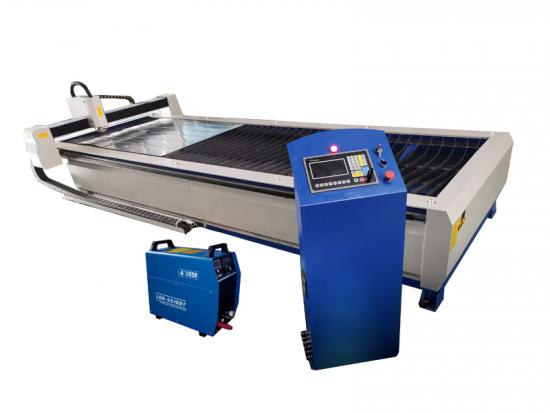
Start with the sheet you actually load. Most shops buy steel in the standard 4-by-8-foot format, so a table that accepts that sheet whole saves you from pre-cutting every job. A table smaller than your sheet forces extra handling. A table far larger than your work wastes floor space and money.
Frame rigidity matters just as much. A heavy, braced frame holds its geometry when the torch accelerates across the plate. A light frame flexes, and flex shows up as wobble in the cut edge. Walk around the machine and push on the frame. Any movement you can feel by hand will appear in your parts.
Drive type shapes accuracy and durability. Stepper drives cost less and suit lighter cutting and lower duty cycles. Servo drives hold position under load, run faster, and tolerate demanding, near-continuous production. Neither is wrong. Match the drive to your duty level and your tolerance needs.
Portability features help smaller and mobile setups. Handles, wheels, and compact footprints let you move a light table between bays or load it onto a truck. Heavier production tables stay put, and that is fine.
The controller and the CAM software decide how quickly a design becomes a finished part. Check controller compatibility first. Confirm the controller reads the file formats your designers export and connects to the software your team already uses.
Then test the workflow from design file to nested cut file. You want to import a drawing, nest parts across the sheet, set the cut path and lead-ins, and post the program without jumping between three unrelated programs. Ask for a live demonstration with one of your own drawings. A clean, short workflow pays back on every job.
Software ease of use matters for training. A clear interface shortens the learning curve for new operators. Look for nesting tools that reduce scrap and a post-processor that matches your machine.
Treat the table, the motion system, and the software as one package. A rigid frame with a precise drive and friendly software turns a CNC Plasma Cutter into a dependable production tool. A weak link in any of the three drags down the whole machine.
The torch is where the cut actually happens, so its design drives consistency. A well-engineered torch holds the electrode, nozzle, and shield in precise alignment. That alignment keeps the arc stable cut after cut. A loose or poorly matched torch assembly lets the arc wander, and you see the result as edge variation and dross.
Consumable quality affects how often you stop production to swap parts. Branded consumables typically hold their geometry longer and deliver repeatable cuts. Third-party consumables often cost less per piece and suit lighter duty or non-critical work. Neither choice is wrong. Match the consumable to your duty level and your quality standard, and track replacement intervals so you know your true cost.
Your building must supply the machine before it ever cuts. Confirm the electrical service matches the cutter's requirements, including breaker capacity and circuit size. Undersized service causes nuisance trips and shortens equipment life.
Compressed air deserves equal attention. Plasma cutting demands clean, dry air at stable pressure. Moisture and oil in the air supply damage consumables and degrade cut quality. Size your compressor and dryer for continuous demand, not peak demand alone.
Estimate ongoing cost per part by adding consumable spend, power draw, and air consumption, then dividing by parts produced. Track this figure monthly. A premier plasma CNC plasma cutting setup earns that label through low cost per part, not through a low sticker price. Run the numbers on your own workload before you commit.
Safety features protect the operator and the shop, so verify them before you sign. Confirm the machine includes fume extraction or a ventilation plan, because plasma cutting throws smoke and fine particulate into the air. Check for torch height control, which keeps the nozzle at the correct distance and reduces both arc flash and consumable wear. An emergency stop must sit within easy reach of the operator station. Shielding around the cutting area limits exposure to the arc's ultraviolet light. Ask for the compliance documentation that covers your region, and confirm the installation meets local electrical and ventilation codes.
The machine price is only part of the budget. Add the cost of electrical service upgrades, a compressor and dryer sized for continuous demand, ventilation or a downdraft table, and the floor space the table occupies. Confirm your building can supply power and air before delivery day. A machine that arrives without these services in place sits idle.
Evaluate after-sales support with the same care. Ask how quickly the supplier ships spare parts, whether technical help is available during your production hours, and what training comes with the purchase. Lockforming Machinery's support and consumables programs offer one example of how a supplier can bundle parts availability with technical backup. A responsive supplier keeps a CNC Plasma Cutter running through a busy week. A weak one leaves you waiting on a nozzle while jobs stack up.
Amperage and cut capacity set what your machine can cut well. Table and motion accuracy decide how clean and repeatable each part comes out. Software fit, consumable cost, and supplier support determine how smoothly the machine runs month after month.
Rank these features against your own thickness range, volume, cut quality needs, and budget before you compare models. Ask for cut samples or a live demo on your own drawings.
A well-matched CNC Plasma Cutter from a responsive supplier, such as Lockforming Machinery's support and consumables programs, often outperforms an oversized machine with weak backup.
List the thicknesses you cut every week and find the amperage that holds a quality edge on the thickest one. Treat the published maximum as a ceiling, not a working target. Ask the supplier which thickness the machine cuts cleanly on a routine basis.
Often yes, within limits. A higher-amperage unit cuts thin material well and still handles heavier stock. The trade-off shows up in power draw and travel speed on light jobs. Compare CNC plasma cutting machines on published speed tables for both ends of your range before you decide.
Request cut samples in your own material and thickness. Inspect the edge for smoothness, dross, and distortion. Ask for a live demo using one of your drawings. A sample part tells you more about real performance than any specification sheet.
A used machine can fit a tight budget. Inspect the frame for flex, check the drive system for wear, and confirm spare parts remain available for the controller and torch. Factor in consumables and any needed repairs before you compare the total against a new unit.
Confirm your electrical service, compressor and dryer capacity, ventilation plan, and floor space all match the machine's requirements. Line up operator training and ask how fast the supplier ships spare parts. A machine that arrives before these services are ready sits idle.

online service



 IPv6 network supported