
When manufacturing rectangular HVAC ductwork, selecting the right flange connection system is critical for installation efficiency, structural strength, airtightness, and overall project cost.
Among the various duct connection methods available today, TDF Flange and Angle Iron Flange remain the two most widely used options worldwide.
While both systems serve the same purpose—connecting duct sections securely—they differ significantly in manufacturing process, material consumption, installation speed, and long-term project costs.
In this article, we'll compare TDF Flanges and Angle Iron Flanges in detail to help HVAC contractors, duct fabricators, and project engineers choose the best solution for their applications.
TDF (Transverse Duct Flange) is an integrated flange system formed directly from the duct sheet metal itself.
Instead of attaching a separate steel angle frame, the flange profile is rolled directly onto the duct edge using a TDF flange forming machine.
This creates a complete connection system that requires:
TDF flange profile
Corner pieces
Gasket or sealant
Bolts or cleats
The integrated design has made TDF one of the most popular flange systems in modern HVAC duct fabrication.
Angle Iron Flange is the traditional duct connection method.
In this system, separate steel angle frames are fabricated and attached to the duct ends.
The process typically includes:
Cutting angle steel
Punching bolt holes
Welding corners
Assembling the frame
Attaching the frame to the duct
Although labor-intensive, angle iron flanges have been widely used for decades, especially in large industrial ventilation systems.
Because the flange is formed directly from the duct sheet itself, no additional angle steel is required.
Benefits include:
Lower material consumption
Reduced inventory costs
Less handling and storage
Requires additional steel angle sections for every duct connection.
This results in:
Higher material costs
Increased steel consumption
Additional fabrication requirements
Winner: TDF Flange
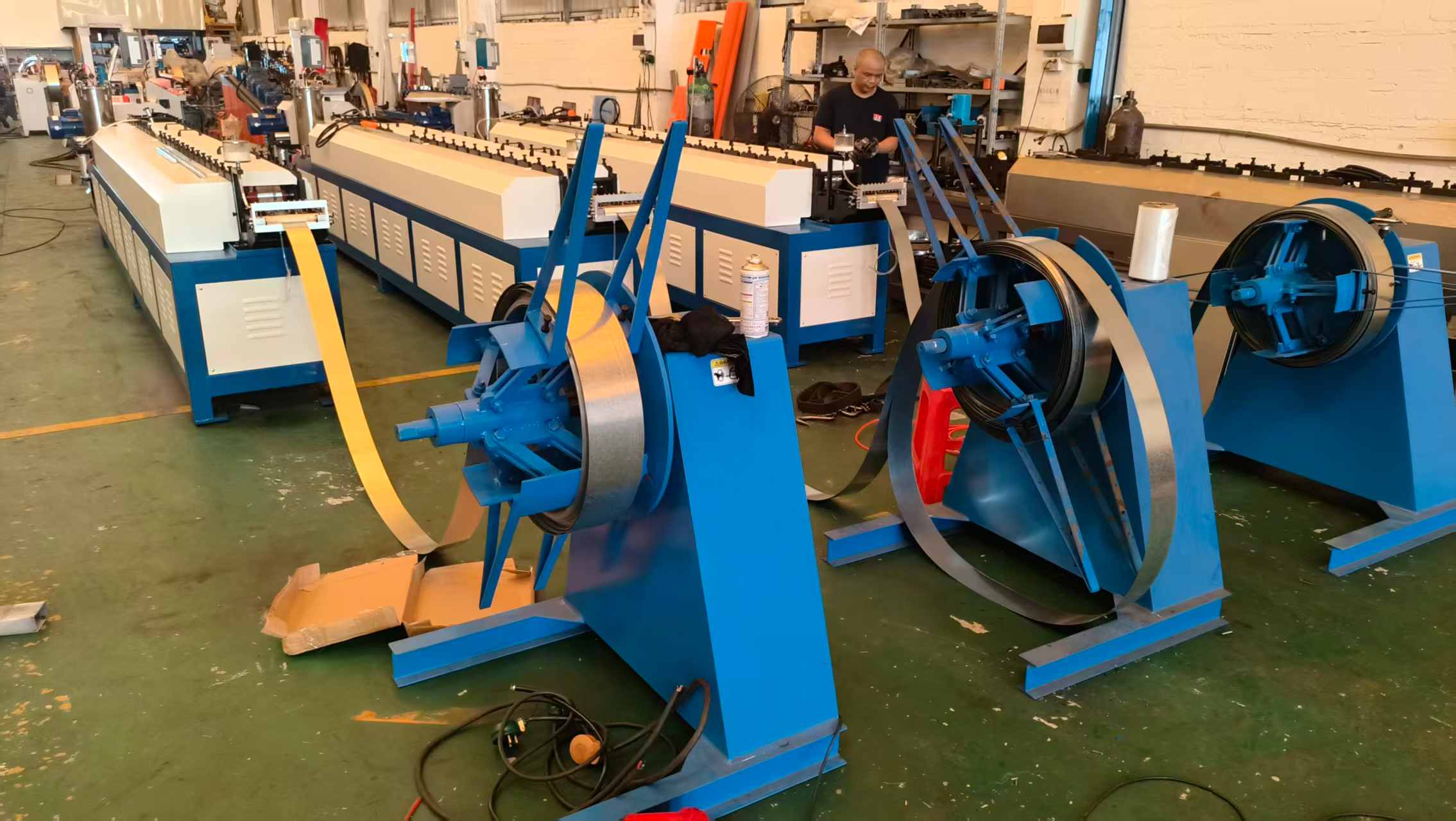
Modern TDF flange machines can produce flange profiles continuously and automatically.
Advantages:
High production speed
Reduced labor requirements
Consistent quality
A single operator can process large quantities of ductwork in a short period.
The manufacturing process involves multiple steps:
Measuring
Cutting
Drilling
Welding
Assembly
This significantly increases labor time.
Winner: TDF Flange
Installation efficiency directly affects project timelines.
Installers simply:
Add corner pieces
Apply sealant
Connect duct sections
The process is fast and straightforward.
Installation requires:
Aligning heavy steel frames
Additional bolts
More field labor
Projects often take longer to complete.
Winner: TDF Flange
When dealing with:
Large duct dimensions
High-pressure systems
Industrial ventilation
Angle iron flanges provide exceptional rigidity and strength.
Suitable for most commercial HVAC applications but may require reinforcement for very large ducts.
Winner: Angle Iron Flange
Integrated construction means less metal and lower overall duct weight.
Benefits:
Easier transportation
Easier installation
Reduced support requirements
Additional steel frames increase total system weight.
Winner: TDF Flange
Properly installed TDF systems can achieve excellent airtightness due to:
Continuous flange profile
Fewer joints
Better gasket compression
Angle iron flanges can also provide good sealing performance but often require additional sealing work.
Winner: TDF Flange
| Feature | TDF Flange | Angle Iron Flange |
|---|---|---|
| Material Cost | Low | High |
| Manufacturing Speed | Fast | Slow |
| Labor Requirement | Low | High |
| Installation Speed | Fast | Slow |
| Weight | Light | Heavy |
| Structural Strength | Good | Excellent |
| Air Tightness | Excellent | Good |
| Project Cost | Lower | Higher |
| Commercial HVAC | Ideal | Acceptable |
| Industrial HVAC | Suitable | Ideal |
TDF flange systems are ideal for:
Commercial buildings
Office towers
Shopping malls
Hotels
Hospitals
Residential projects
Choose TDF when your priorities are:
✓ Faster fabrication
✓ Lower labor costs
✓ Reduced material expenses
✓ Faster installation
✓ Improved project profitability
Angle iron flanges remain an excellent choice for:
Heavy industrial facilities
Power plants
Mining projects
High-pressure ventilation systems
Extra-large ductwork
Choose angle iron flanges when:
✓ Maximum structural strength is required
✓ Duct sizes are exceptionally large
✓ Project specifications require traditional flange systems
As labor costs continue to rise worldwide, HVAC manufacturers are increasingly adopting automated TDF flange production.
Key reasons include:
Reduced fabrication time
Lower material consumption
Improved productivity
Consistent product quality
Faster project delivery
For duct fabrication shops looking to increase production capacity, investing in a TDF flange forming machine often provides a rapid return on investment.
Both TDF Flanges and Angle Iron Flanges have proven their value in HVAC duct construction. However, for most modern commercial HVAC projects, TDF flange systems offer significant advantages in terms of cost, productivity, weight reduction, and installation efficiency.
While angle iron flanges continue to dominate certain heavy-duty industrial applications, the growing demand for faster and more economical duct manufacturing has made TDF the preferred choice for many duct fabricators worldwide.
As HVAC projects continue to prioritize efficiency and profitability, TDF flange systems are expected to play an even greater role in the future of ductwork manufacturing.
online service



 IPv6 network supported