
When designing an HVAC ventilation system, choosing the right type of ductwork is an important decision.
The two most common duct types used in commercial and industrial HVAC projects are rectangular ducts and spiral ducts.
Both have their own advantages depending on the application, installation environment, and project requirements.
Understanding the differences between rectangular duct and spiral duct can help HVAC contractors and duct manufacturers choose the right solution.
Rectangular duct is one of the most widely used duct systems in commercial HVAC applications.
It is manufactured from galvanized steel sheets and formed into rectangular or square shapes.
Rectangular ducts are commonly installed in:
One of the biggest advantages of rectangular ductwork is its ability to fit into limited ceiling spaces.
Its flat shape makes it easier to install in areas where height is restricted.
Rectangular ducts can provide large airflow volume, making them suitable for large HVAC systems.
They are commonly used for:
Rectangular ducts can be easily customized into different shapes and sizes.
Manufacturers can produce:
according to project requirements.
Spiral duct is a round duct system manufactured by rolling galvanized steel strips into a spiral shape.
It is widely used in modern HVAC applications because of its appearance and performance.
Common applications include:
The round shape of spiral ducts creates smoother airflow compared with rectangular ducts.
This can help:
Spiral ducts usually require fewer connections and accessories.
This makes installation faster and reduces labor costs.
Because of their clean and industrial appearance, spiral ducts are often installed as exposed ductwork.
They are popular in:
| Feature | Rectangular Duct | Spiral Duct |
|---|---|---|
| Shape | Square/Rectangle | Round |
| Installation Space | Better for limited ceiling height | Requires more vertical space |
| Airflow Efficiency | Good | Excellent |
| Installation Speed | Medium | Faster |
| Appearance | Usually hidden | Suitable for exposed installation |
| Manufacturing | Requires more fabrication steps | Continuous production possible |
| Common Applications | Large commercial HVAC | Industrial & modern buildings |
The answer depends on the project requirements.
✔ Space is limited
✔ Large airflow capacity is required
✔ The duct system needs customized shapes
✔ The project is a large commercial building
✔ Fast installation is important
✔ Exposed duct appearance is preferred
✔ Lower pressure loss is required
✔ The project is industrial or commercial
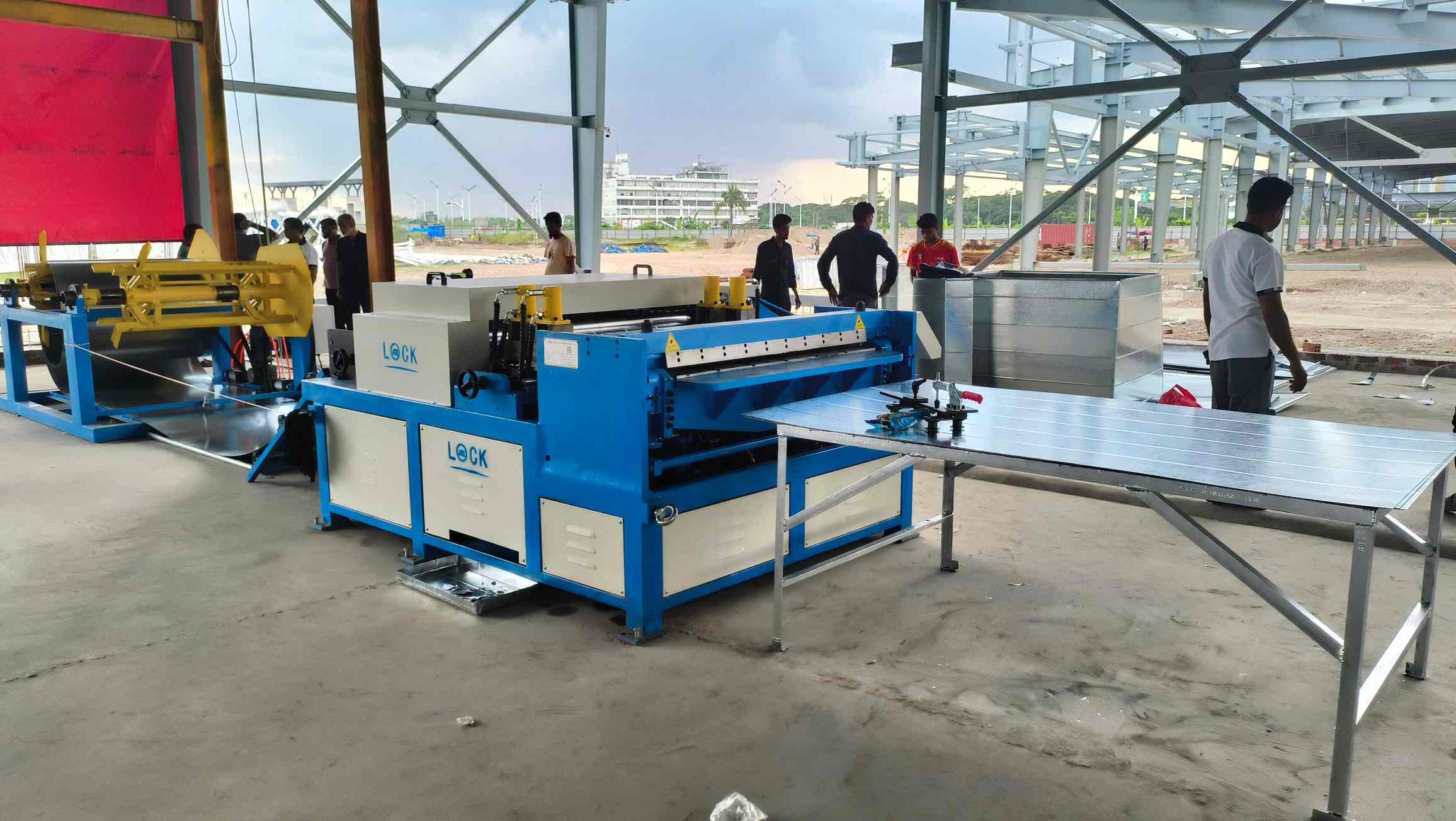
For manufacturers producing rectangular ducts, common equipment includes:
An automatic duct production line can complete multiple processes:
It helps manufacturers increase production efficiency and reduce labor costs.
The Pittsburgh Lock Former creates strong mechanical seams for rectangular duct production.
Benefits:
TDF flange systems are widely used in modern duct fabrication.
Advantages:
For spiral duct production, manufacturers usually require:
A complete spiral duct production line can manufacture:
Before investing in duct manufacturing equipment, consider:
Are your customers mainly:
Large orders require higher automation levels.
A small workshop may start with individual machines, while growing factories may need complete production lines.
Different markets require different solutions.
A professional HVAC machine supplier can recommend equipment based on:
Both rectangular duct and spiral duct have important roles in HVAC systems.
Rectangular ducts provide flexibility and high airflow capacity, while spiral ducts offer excellent airflow performance and faster installation.
For HVAC duct manufacturers, understanding market demand and choosing the right production equipment is the key to building a competitive business.
LOCK provides complete HVAC duct manufacturing solutions, including:
We help HVAC companies worldwide improve production efficiency and build professional duct fabrication facilities.
Contact us to discuss your HVAC duct manufacturing requirements.
online service



 IPv6 network supported